
The bottom line is that ultrasonic pest repeller effectively deals with pests, and they pose no threat to dogs, pet rodents, and humans.
July 25, 2024
4 min read time
This information is reviewed by an independent pest control expert.
All external links are non-affiliated and for informational purposes only

Unwanted pests in our homes are more than just a nuisance; they can be a serious health hazard.
One modern solution that’s gaining popularity is ultrasonic pest repellers.
But, if you’re a dog owner, you’re probably asking yourself: Are ultrasonic pest repellers safe for dogs?
Let’s dive into this topic and find out!
Ultrasonic pest repellers are electronic devices designed to emit sound waves at frequencies that are intolerable to pests like rodents, insects, and other unwanted critters.
These high-frequency sounds are typically beyond the range of human hearing.
Here’s a quick breakdown of how these devices operate:
The safety of ultrasonic pest repellers concerning dogs is a common worry among pet owners.
Let’s break down the concerns and reassure you with some facts.
Dogs have a much broader range of hearing than humans, typically from 40 Hz to 60,000 Hz (60 kHz). This means they can indeed hear ultrasonic sounds, including those emitted by pest repellers.
However, just because dogs can hear these frequencies doesn’t necessarily mean that ultrasonic pest repellers are harmful to them.
Here are a few points to consider:
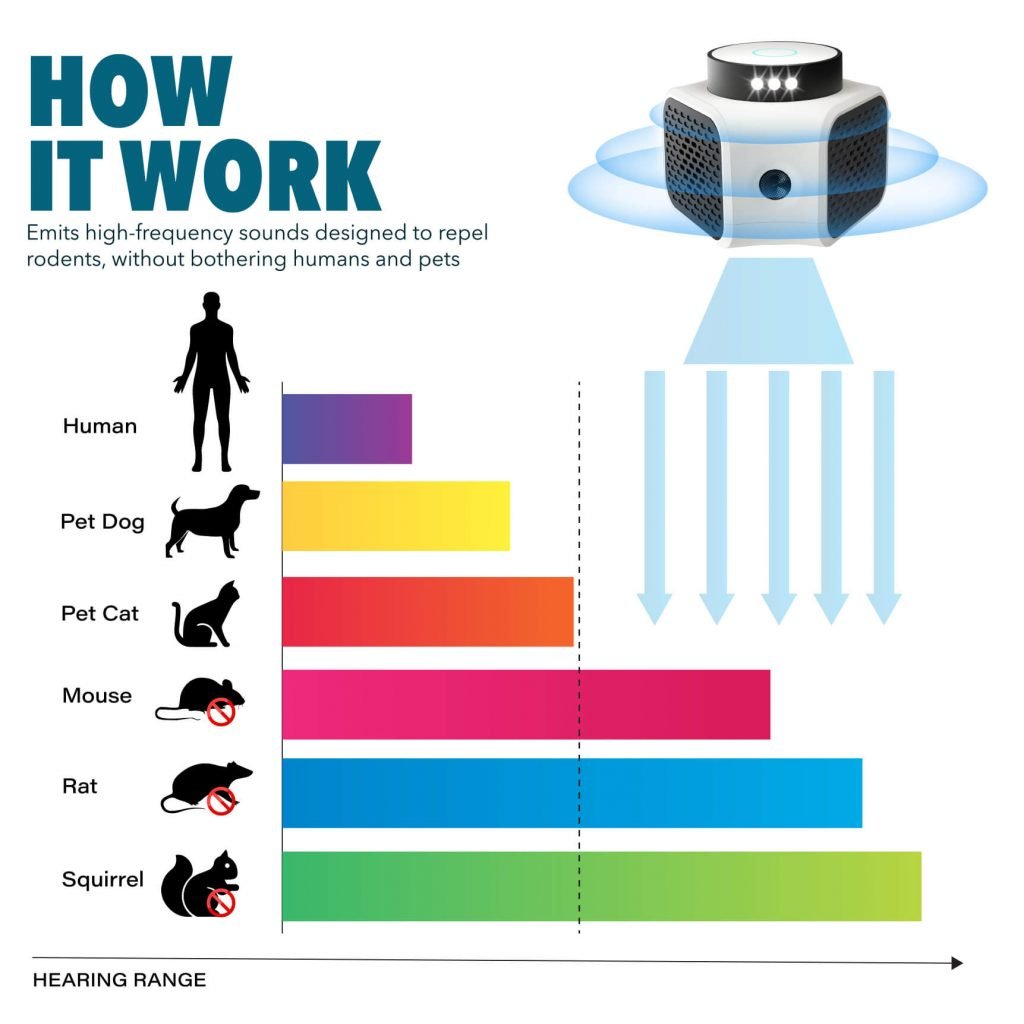
Keep an eye on your dog when you first install an ultrasonic pest repeller.
Here are some signs that your pet might be affected:
If you decide to use an ultrasonic pest repeller and have a dog at home, follow these tips to ensure your pet’s comfort and safety:
If you’re still hesitant about using ultrasonic pest repellers, there are other pest control methods that are pet-friendly:
So, are ultrasonic pest repellers safe for dogs?
Generally speaking, yes.
While dogs can hear the high-frequency sounds these devices emit, most dogs either tolerate them well or easily adapt over time.
However, it’s always best to monitor your pet’s behavior and consult with a veterinarian if you have any doubts or notice any signs of distress.
Feel free to share your experiences or ask questions in the comments below—we’d love to hear from you!
Click to leave a comment