
Finding carpet beetle larvae in your bedroom can be unsettling, but they are manageable once you understand what attracts them.
July 23, 2026
5 min read time
This information is reviewed by an independent pest control expert.
All external links are non-affiliated and for informational purposes only
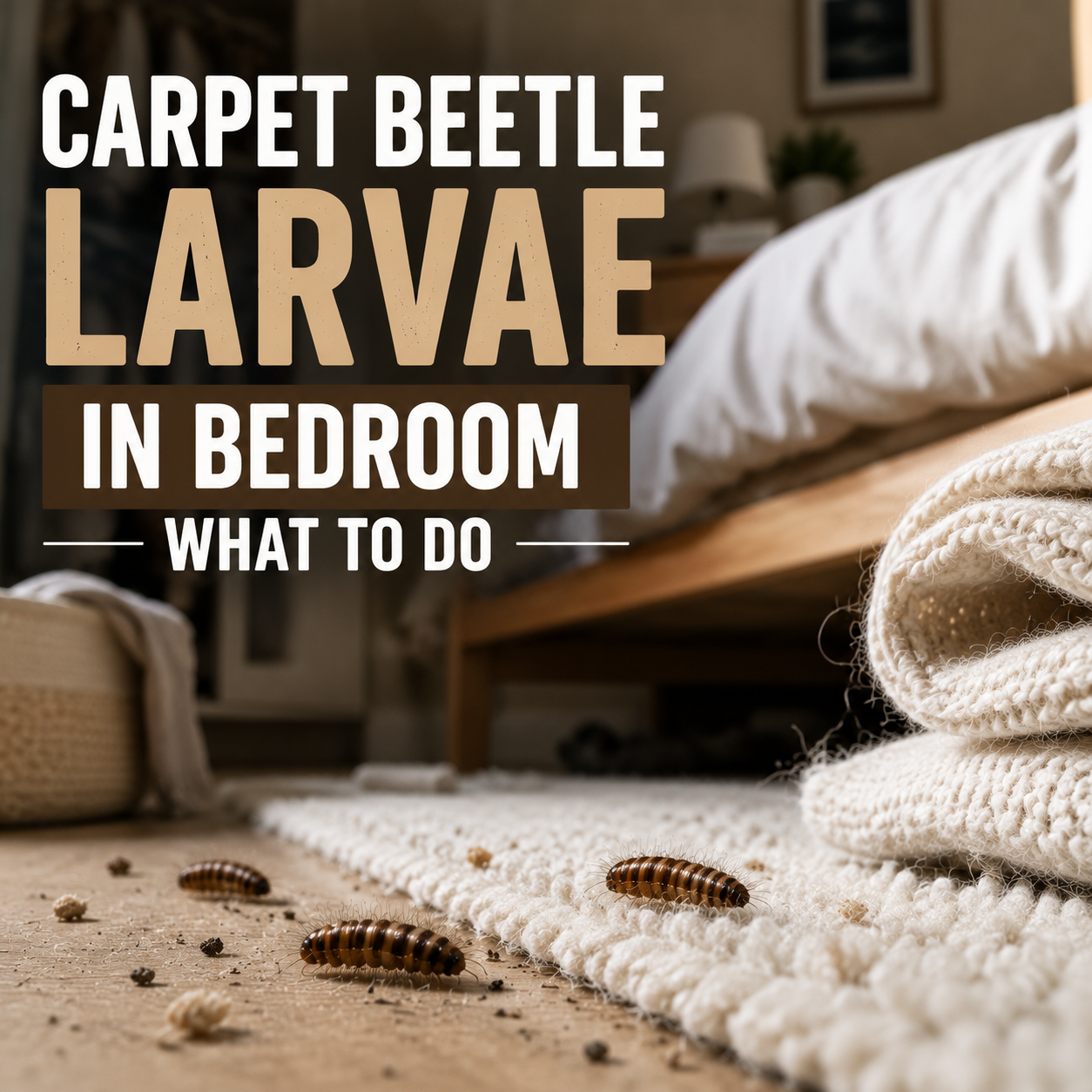
you’re changing your bedsheets when you notice a tiny, fuzzy-looking insect crawling along the edge of your bedroom floor.
At first, you assume it’s just a random bug.
But then you find another one near your closet.
And another one hiding under the bed.
Suddenly, a worrying question comes to mind:
“Are these carpet beetle larvae, and what should I do?”
Finding carpet beetle larvae in a bedroom can feel alarming, especially because bedrooms contain many of the materials these pests are attracted to—such as clothing, blankets, carpets, and upholstered furniture.
The good news is that carpet beetle larvae do not live on humans and do not bite. However, they can damage fabrics and continue spreading if the source is not addressed.
In this guide, we’ll explain why carpet beetle larvae appear in bedrooms, where they hide, and the steps homeowners can take to remove them effectively.
Bedrooms are one of the most common places where carpet beetle larvae are discovered.
This is because bedrooms often contain many materials that larvae can use as food sources:
Unlike bed bugs, carpet beetle larvae are not attracted to people.
They are attracted to materials.
If they are found in a bedroom, it usually means there is a nearby food source or hiding area supporting their development.
Before treating the problem, it is important to confirm what you are seeing.
Carpet beetle larvae are usually:
They may look similar to:
A key identifying feature is their hairy appearance.
Carpet beetle larvae prefer dark, quiet areas that are rarely disturbed.
Common hiding places include:
This area often collects:
which can provide food for larvae.
Closets are especially attractive because they contain:
Larvae often hide along:
Areas behind:
can become undisturbed nesting areas.
Check:
especially items that are rarely used.
Several factors can make bedrooms appealing.
Carpet beetle larvae feed on:
Homes with pets may provide additional food sources.
Pet hair can accumulate:
Areas that are rarely cleaned or moved allow larvae to develop unnoticed.
Adult carpet beetles may enter bedrooms through:
Once inside, they may lay eggs near suitable food sources.
Wash:
Cleaning fabrics helps remove hidden eggs or larvae.
Focus on:
Vacuuming helps remove:
Check:
Look for:
Move furniture and clean areas that are normally ignored.
Pay attention to:
After cleaning, continue checking for:
Repeated sightings may indicate a larger infestation.
Carpet beetle larvae do not bite.
If you are seeing bites, another pest may be responsible.
Seeing one larva often means there may be others nearby.
Many bedroom infestations begin around stored fabrics.
Without removing food sources, larvae may return.
Once the infestation is controlled:
Especially:
Use sealed containers for:
Regular cleaning reduces available food sources.
Check secondhand:
before bringing them indoors.
Reduce access through:
Finding carpet beetle larvae in your bedroom can be unsettling, but they are manageable once you understand what attracts them.
The key is not simply removing the larvae you see.
It is identifying why they appeared:
By combining thorough cleaning, inspection, and prevention, homeowners can stop carpet beetle larvae from becoming a recurring problem.
Because when it comes to carpet beetles, eliminating the source is what creates long-term results.