
Regular cleaning, monitoring for signs of infestations, and proper storage can help ensure that what’s crawling in your closet is simply your imagination — and not a sign of a pest problem.
December 28, 2025
6 min read time
This information is reviewed by an independent pest control expert.
All external links are non-affiliated and for informational purposes only
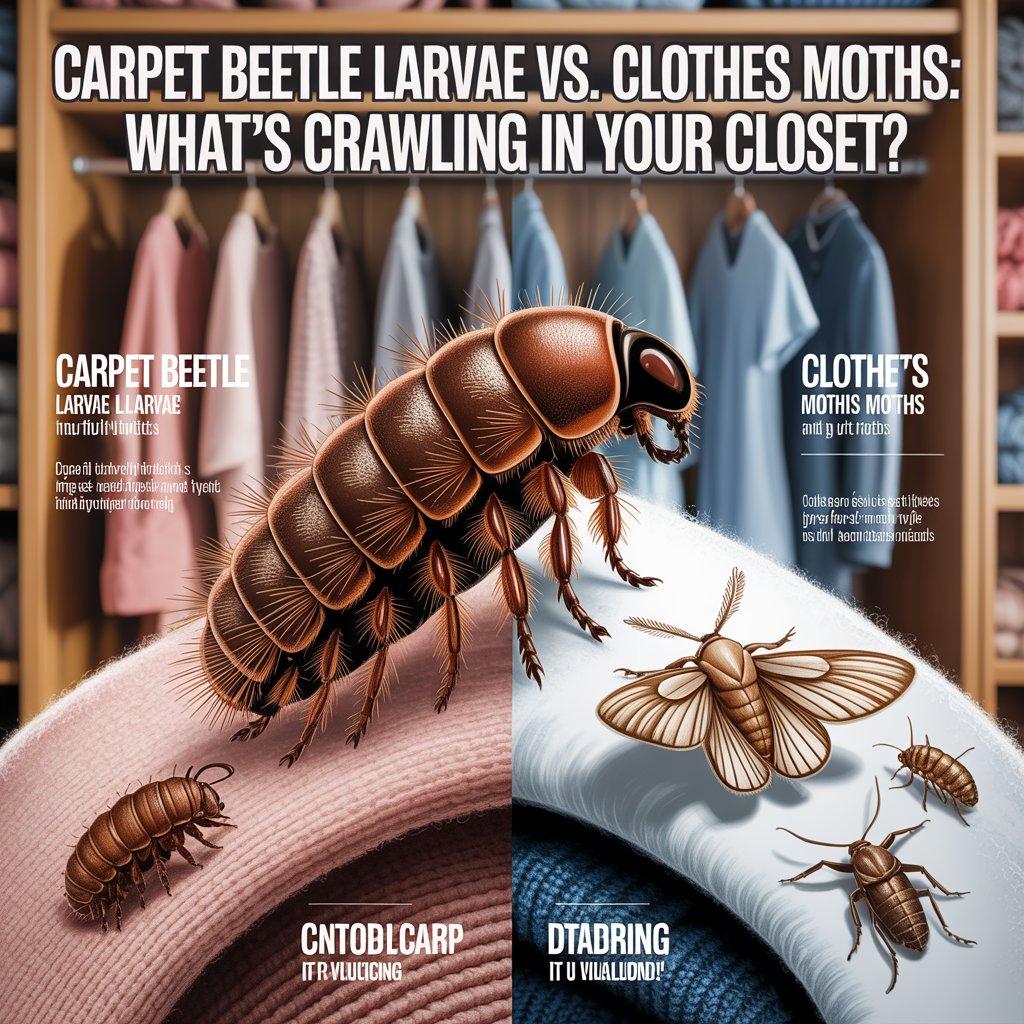
If you’ve ever found mysterious holes in your favorite sweater or noticed strange little bugs crawling around your closet, you’re not alone. Many people encounter these pesky intruders, but few know exactly what they’re dealing with. Are they carpet beetle larvae or clothes moths? Understanding the difference between these two common pests is crucial for effective pest control and protecting your beloved garments. Let’s dive into the world of closet intruders and find out what’s really lurking in the shadows of your wardrobe.
Imagine reaching for your favorite wool sweater, only to discover a series of tiny holes marring its once-perfect surface. Frustration sets in as you wonder what could have caused this damage. With a closer inspection, you might spot small, crawling insects or fuzzy little larvae — but are they carpet beetles or clothes moths?
Both of these pests can wreak havoc on your wardrobe, but their habits, life cycles, and the damage they cause are quite different. This article aims to clarify these differences, helping you identify the culprits and take the appropriate steps to safeguard your clothing and home.
Carpet beetles belong to the family Dermestidae and are small, oval-shaped insects. Depending on the species, they can range from 1/8 to 1/4 inch long. The most common types found in homes are the Varied Carpet Beetle and the Black Carpet Beetle. They are often mistaken for ladybugs due to their similar size and shape, but their color patterns can vary significantly.
Carpet beetles undergo a complete metamorphosis, which includes four stages: egg, larva, pupa, and adult.
Carpet beetle larvae are notorious for their appetite for animal-based fibers. They thrive on:
Additionally, they may feed on:
This wide array of dietary preferences makes them formidable foes in your home environment.
Carpet beetle larvae are often the culprits behind the damage to your clothes. Here’s how to identify them:
The larvae cause damage by chewing through fabrics, resulting in small holes and fraying edges. Unlike clothes moths, carpet beetles can also damage carpets, upholstery, and even stored items like blankets and quilts.
Clothes moths are part of the family Tineidae and are known for their destructive appetite for natural fibers. The two most common species are the Webbing Clothes Moth and the Casemaking Clothes Moth.
Similar to carpet beetles, clothes moths undergo a complete metamorphosis:
Clothes moth larvae primarily feed on:
They prefer natural fibers over synthetic ones, making your wool sweaters and silk blouses prime targets.
To identify clothes moth larvae, look for:
Clothes moth larvae cause damage by eating holes in fabrics, often leaving irregular-shaped holes behind. Unlike carpet beetles, they often leave behind silk threads or webbing in the areas they infest.
Understanding the differences between carpet beetle larvae and clothes moths is essential for effective pest control. Here’s a quick comparison:
| Feature | Carpet Beetle Larvae | Clothes Moth Larvae |
|---|---|---|
| Color | Brown or tan, fuzzy | Creamy white to yellowish, smooth |
| Size | About 1/4 inch long | About 1/2 inch long |
| Damage | Irregular holes in fabrics, carpets, etc. | Irregular holes in fabrics, silk webbing |
| Diet | Animal-based fibers, dust, pet hair | Primarily natural fibers (wool, silk) |
| Movement | Slow and erratic | More direct and purposeful |
Preventing both carpet beetles and clothes moths from invading your closet is crucial. Here are some effective strategies:
If you discover either carpet beetle larvae or clothes moths in your closet, swift action is necessary:
Understanding the difference between carpet beetle larvae and clothes moths is essential for effectively protecting your clothing and home. Both pests can cause significant damage, but by taking preventive measures and knowing how to identify and manage them, you can keep your closet safe from these unwelcome visitors.
Remember, a little diligence goes a long way. Regular cleaning, monitoring for signs of infestations, and proper storage can help ensure that what’s crawling in your closet is simply your imagination — and not a sign of a pest problem. Happy guarding your garments!