
Though carpet beetles and bed bugs are both small, the damage they cause can be significant.
April 1, 2026
4 min read time
This information is reviewed by an independent pest control expert.
All external links are non-affiliated and for informational purposes only
Picture this: you wake up, stretch, and reach for your favorite sweater—only to notice a tiny hole. You shrug it off. Later, small red bites appear on your arm after a night’s sleep. Panic sets in: is it bed bugs? Carpet beetles? Or both?
For many homeowners, the difference isn’t obvious. Misidentifying the pest can lead to wasted time, ineffective treatments, and ongoing damage.
In this guide, we’ll walk you through the key differences between carpet beetles and bed bugs, share real-world cases from the field, and provide actionable tips to accurately identify and address these pests.
Picture this: you notice small bites on your arm or holes in your clothes. Naturally, you start to worry. Could it be bed bugs? Carpet beetles? Maybe both?
The truth is, many homeowners confuse these two pests. And that confusion can lead to ineffective treatments, wasted time, and ongoing damage.
In this article, we’ll explore the key differences between carpet beetles and bed bugs, share real cases from the field, and give you actionable tips for accurate identification.
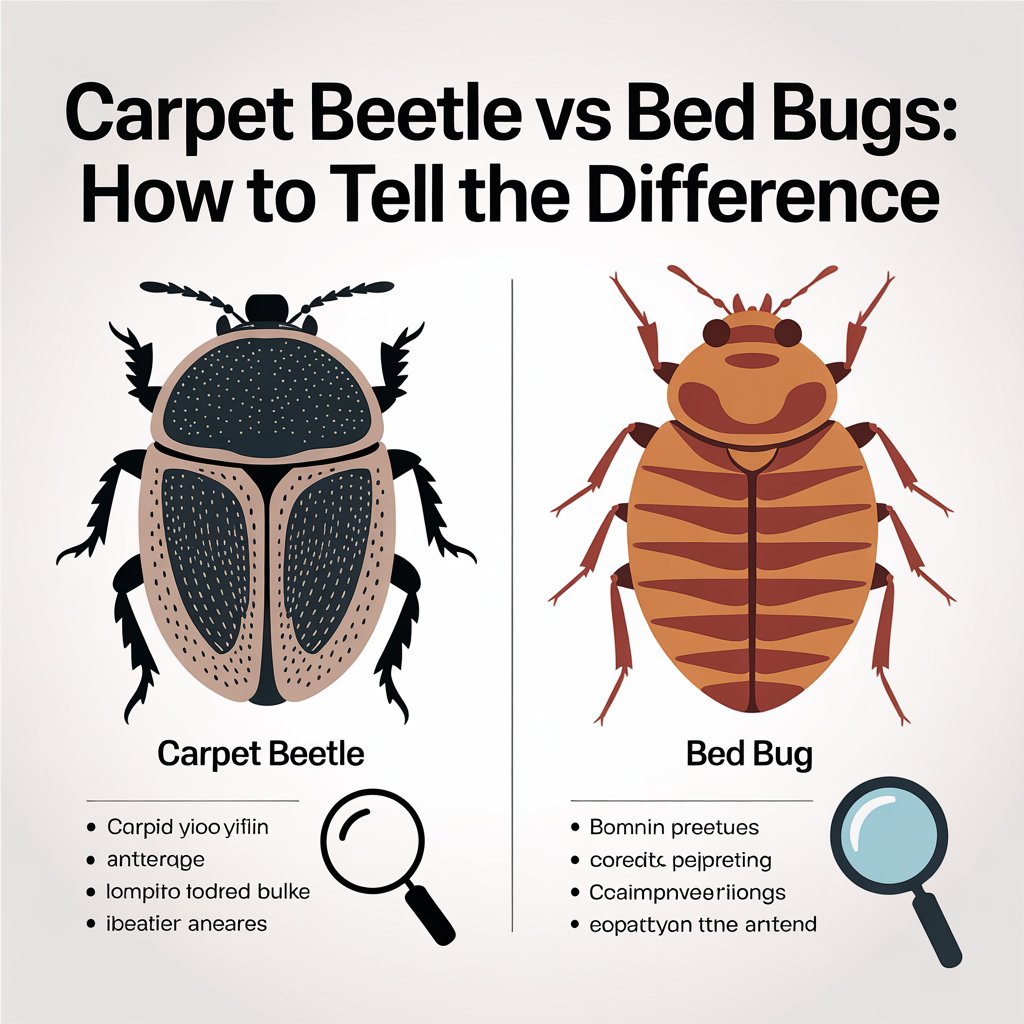
Carpet beetles are small, oval insects that primarily feed on natural fibers like:
The adult beetles are harmless, but their larvae—tiny, bristly worms—cause the real damage.
Common signs of a carpet beetle infestation:
Carpet beetles are stealthy—they often go unnoticed until the damage becomes obvious.
Bed bugs, on the other hand, are blood-feeding parasites that target humans and pets. They are flat, reddish-brown insects about the size of an apple seed.
Common signs of bed bug activity:
Bed bugs are nocturnal and hide during the day, which is why infestations can grow unnoticed for weeks or even months.
| Feature | Carpet Beetles | Bed Bugs |
|---|---|---|
| Feeding | Larvae feed on natural fibers | Adults feed on blood |
| Damage Type | Holes in clothes, carpets, upholstery | Bites on skin, red spots |
| Appearance | Small, oval, bristly larvae | Flat, reddish-brown adults |
| Behavior | Often found in hidden, dark areas | Nocturnal, hide in cracks, mattress seams |
| Signs | Shed skins, larvae presence | Blood stains, eggs, bites on humans |
Understanding these differences is crucial—misidentifying the pest can lead to ineffective treatments and prolonged infestations.
A homeowner noticed small itchy bites and assumed bed bugs. Upon inspection, the culprit was actually carpet beetle larvae hidden in the closet.
Lesson learned:
Always inspect both fabrics and sleeping areas. Misidentification can cause unnecessary panic.
In another home, tiny holes in rugs led the family to believe it was carpet beetles. But further inspection revealed a bed bug infestation in the bedroom and furniture.
Lesson learned:
Look for both physical damage and bite patterns. Both pests can coexist in a home.
Taking the time to accurately identify the pest can save you weeks of ineffective treatment.
While some small carpet beetle problems can be handled with cleaning and targeted treatments, bed bugs are notoriously difficult to eliminate without expert help.
Call a professional if you notice:
A trained technician can quickly confirm the pest type and apply the most effective solution.
Though carpet beetles and bed bugs are both small, the damage they cause can be significant. Proper identification is the first step toward effective treatment.
By understanding the key differences, inspecting carefully, and acting promptly, you can protect your home from these persistent pests.
Remember: a quick response today can prevent months of frustration tomorrow.