
By taking proactive measures—such as sealing entry points, maintaining your yard, treating pets, and managing indoor cleanliness—you can significantly reduce the chances of encountering these pesky critters in your home
March 8, 2026
6 min read time
This information is reviewed by an independent pest control expert.
All external links are non-affiliated and for informational purposes only
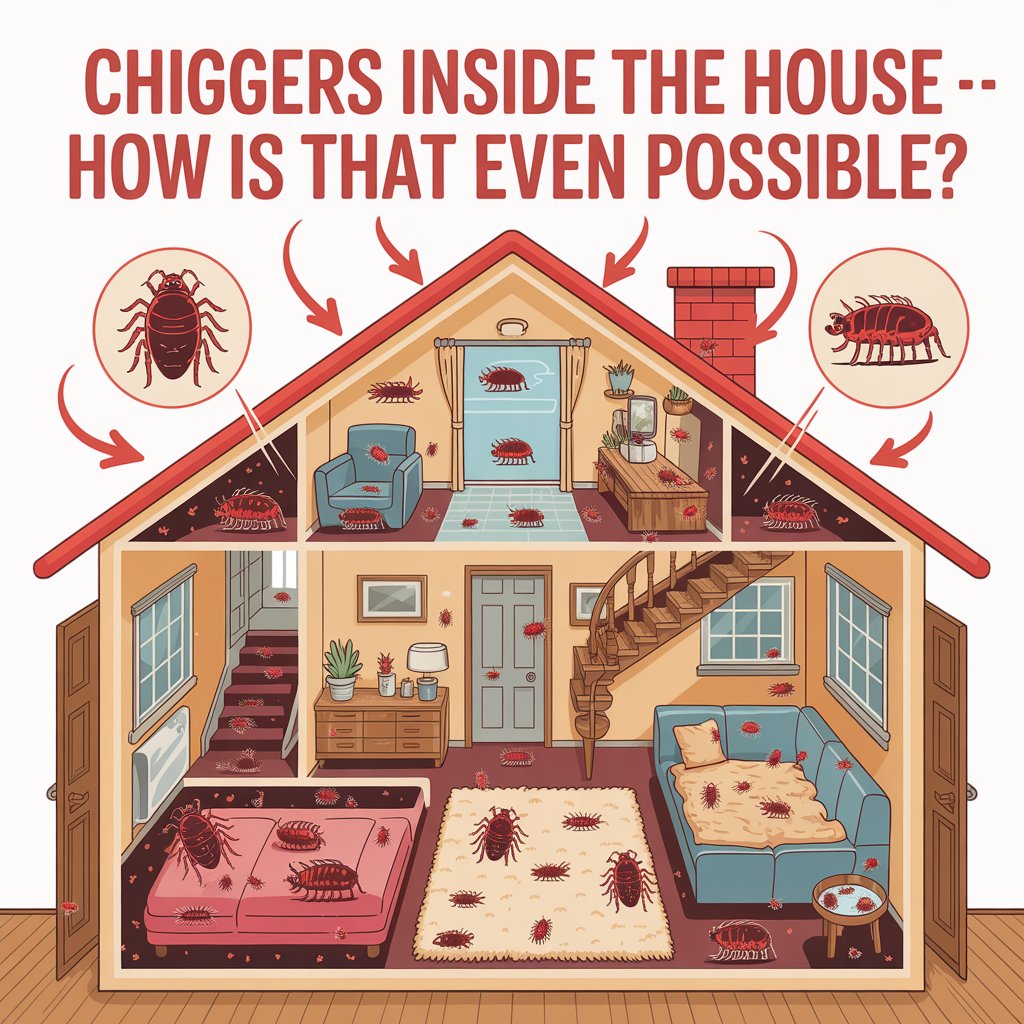
Imagine you’re relaxing on your couch after a long day, only to discover tiny, itchy bites on your skin. You might wonder, “How did chiggers get inside my house?” These pesky little critters can cause quite a stir, and understanding their behavior and habitat can help you protect your home and family. In this article, we’ll explore the fascinating world of chiggers, how they invade our living spaces, and what you can do to keep them at bay.
Before we delve into how chiggers can make their way indoors, let’s clarify what they are. Chiggers, also known as harvest mites or red bugs, are the larvae of certain species of mites belonging to the family Trombiculidae. These tiny, often invisible creatures measure about 1/150th of an inch, making them hard to see without a magnifying glass.
Understanding the life cycle of chiggers is crucial to grasping how they invade homes:
The larvae are the culprits responsible for the infamous itchy bites, but how do they get into our homes?
One of the simplest ways for chiggers to enter your home is through open windows and doors. They are often found in yards, gardens, and fields, and when the weather is warm, they might hitch a ride on pets or even on your clothing.
Chiggers can easily attach to your furry friends. Cats and dogs that roam outside can pick up these little pests and bring them inside. Once in your home, chiggers can transfer to carpets, furniture, and even your bed.
You might not realize it, but chiggers can cling to your clothing or shoes after spending time outdoors. When you walk into your house, they may fall off and settle in your living space.
Activities such as gardening, hiking, or playing sports in grassy areas can expose you to chiggers. Even if you take precautions, some can still find their way into your home via your clothes or skin.
Sometimes, chiggers can hitch a ride on items brought into the home, such as firewood, outdoor furniture, or even plants. If these items are infested, they might unknowingly introduce chiggers to your indoor environment.
The primary concern with chiggers is their bites. When they attach to the skin, they inject saliva that contains enzymes to break down skin cells. This causes intense itching and irritation, leading to red, swollen welts.
Scratching chigger bites can lead to secondary infections. Bacteria can enter the skin through open wounds, leading to further complications.
The itchiness can be quite disruptive, affecting sleep and daily activities. In severe cases, an allergic reaction can occur, causing more significant health issues.
Now that we know how chiggers can get inside, let’s discuss how to prevent them from invading your home.
If you find yourself with chiggers in your home, here’s how to handle the situation.
Chiggers are tiny but mighty pests that can invade our homes under the right conditions. Understanding their behavior, life cycle, and how they enter our living spaces is essential for effective prevention. By taking proactive measures—such as sealing entry points, maintaining your yard, treating pets, and managing indoor cleanliness—you can significantly reduce the chances of encountering these pesky critters in your home.
If you do find chiggers indoors, act quickly to treat bites and eliminate the source of the infestation. With the right knowledge and precautions, you can keep your home chigger-free and enjoy your living space without the itch!
By following the tips outlined above, you can ensure that your home remains a comfortable sanctuary, free from unwanted guests like chiggers. Remember, staying informed is your best defense!