
Termite treatment isn’t about choosing the “most powerful” option—it’s about choosing the right method for the specific infestation.
May 25, 2026
4 min read time
This information is reviewed by an independent pest control expert.
All external links are non-affiliated and for informational purposes only
After discovering signs of termites, you start researching treatment options online.
Almost immediately, you’re hit with a long list of choices:
And somehow, every method claims to be the most effective.
At that point, it becomes difficult to tell:
Which termite treatment method actually makes sense for your situation?
The truth is, different termite problems require different approaches. What works well in one home may not be the best solution for another.
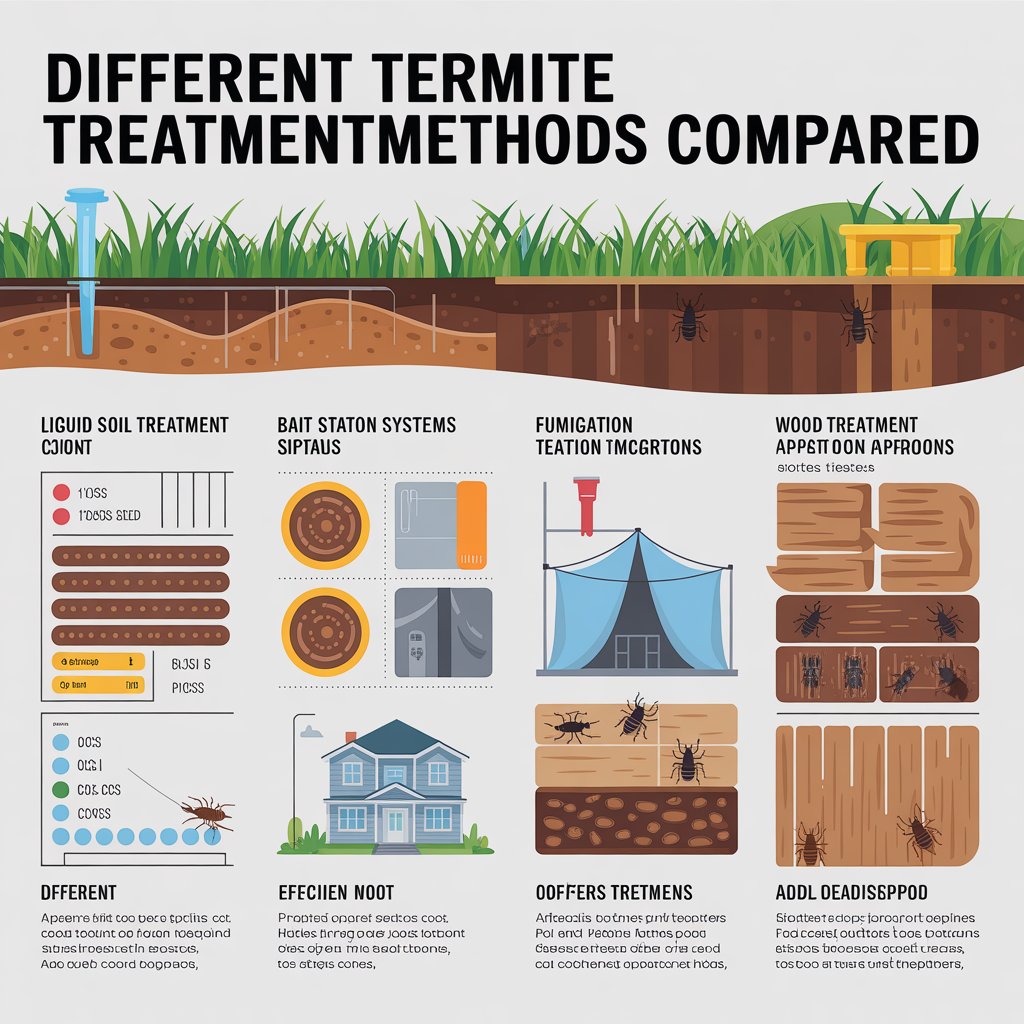
In this guide, we’ll compare the most common termite treatment methods, explain how they work, and break down the situations where each approach is typically used.
One of the biggest misconceptions about termites is that there’s a single “best” treatment method.
In reality, the right solution depends on:
That’s why professional inspections are so important before choosing a treatment plan.
Before comparing methods, it helps to understand the two major termite categories homeowners usually encounter.
Different species often require very different treatment strategies.
Liquid treatments are one of the most common methods used for subterranean termites.
They work by creating a treated barrier around the structure. (epa.gov)
Bait systems use monitoring stations placed around the property.
Termites consume the bait and carry it back to the colony. (terminix.com)
Fumigation involves enclosing the structure and introducing gas fumigants throughout the home.
This method is most commonly associated with drywood termites. (orkin.com)
These methods target specific termite activity areas directly.
They are often used:
Heat treatments use controlled high temperatures to eliminate termites in targeted areas.
There’s rarely a universal answer.
In general:
The “best” method depends more on the infestation itself than on the product being used.
Even after treatment, ongoing monitoring and prevention are important.
More aggressive treatments aren’t always necessary for smaller infestations.
Professional termite control usually involves:
which are difficult to replicate with DIY methods alone.
Termite treatment isn’t about choosing the “most powerful” option—it’s about choosing the right method for the specific infestation.
Some situations require targeted localized treatment. Others may require broader structural protection.
Understanding the strengths and limitations of each approach helps homeowners make more informed decisions and avoid unnecessary treatments.
Because with termites, the best results usually come from matching the treatment to the actual problem—not just reacting to the damage.