
Ants are not easy to get rid of too. You might think you have eliminated them, but they keep springing up around your home.
April 14, 2025
7 min read time
This information is reviewed by an independent pest control expert.
All external links are non-affiliated and for informational purposes only
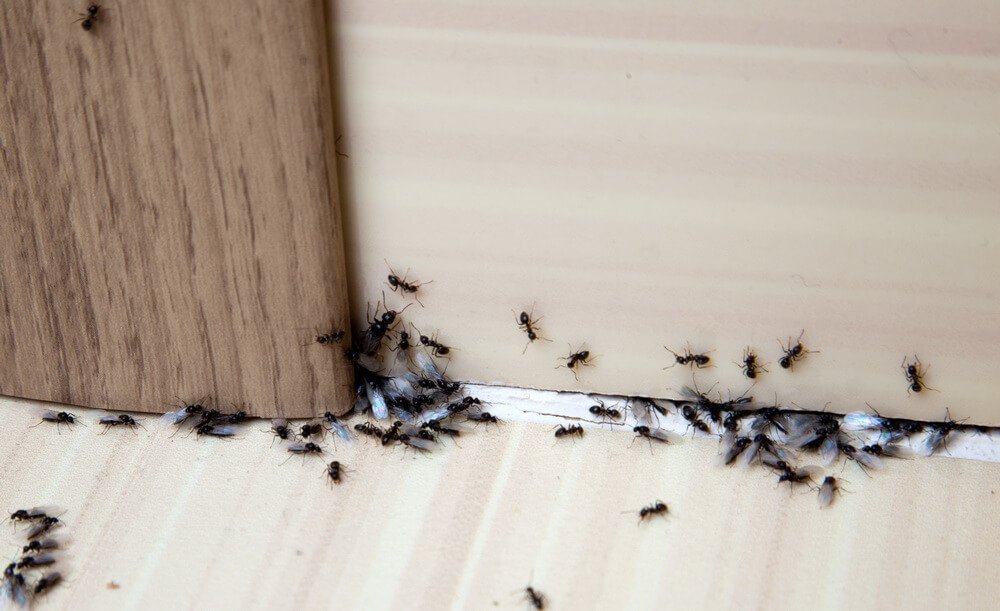
Have you ever walked into your kitchen only to find tiny ants marching across the counter, searching for crumbs? Or perhaps you’ve spotted a trail of these industrious insects in your garden, ruining your perfectly manicured lawn? You’re not alone! Ant invasions are a common household nuisance, prompting many to seek effective solutions. One such solution that has gained popularity in recent years is the ultrasonic pest repeller. But do these devices actually work on ants? Let’s dive deep into the world of ultrasonic pest repellers and uncover the truth.
Ultrasonic pest repellers are electronic devices designed to deter pests, including ants, rodents, and insects, by emitting high-frequency sound waves. These sounds are typically above the audible range for humans (20 kHz and above) and are thought to create an uncomfortable environment for pests. The idea is that the ultrasonic waves disrupt the pests’ communication and navigation systems, encouraging them to leave the area.
The primary mechanism of ultrasonic pest repellers is quite simple. When plugged into an electrical outlet, they generate ultrasonic sound waves that spread throughout the area. Here’s a brief overview of their operation:
While the concept seems straightforward, the effectiveness of ultrasonic pest repellers remains a topic of debate.
Ultrasonic waves are sound waves with frequencies higher than what humans can hear. They are used in various applications, including medical imaging (like ultrasounds) and cleaning delicate items. The principle behind their use in pest control relies on the biology of the pests:
However, the critical question remains: Do these ultrasonic waves have the same effect on ants?
The short answer is: It depends. While many users claim success with ultrasonic pest repellers, scientific evidence supporting their effectiveness against ants is limited. Here are some key points to consider:
Most studies on ultrasonic pest repellers focus on rodents and some insect species, with little research directly addressing their impact on ants. This lack of specific data makes it challenging to conclude definitively that ultrasonic repellers work for ant control.
Ants primarily communicate through pheromones, which are chemical signals. While it’s possible that ultrasonic waves could interfere with their communication to some extent, there’s no conclusive evidence to support this theory. Ants have evolved to be resilient and adaptive, so they may not react as strongly to sound waves as other pests.
Many users report mixed results. Some homeowners claim the devices helped reduce their ant problems, while others found little to no difference. This inconsistency may be due to factors like the type of ants, the size of the infestation, and the placement of the devices.
Instead of relying solely on ultrasonic pest repellers, it may be more effective to use them as part of a broader pest control strategy. Combining methods can enhance overall effectiveness in managing ant populations.
Several factors can influence how well an ultrasonic pest repeller works against ants:
Different ultrasonic pest repellers operate at various frequency ranges. Some may be more effective at frequencies that are particularly bothersome to certain pests. Researching the specific frequency range of the repeller can help determine its suitability for your needs.
The location of the ultrasonic pest repeller can greatly affect its efficacy. Placing the device in a central location within the home can help maximize its coverage area. However, obstacles like furniture and walls can diminish its effectiveness.
Not all ants are created equal. Some species may be more susceptible to ultrasonic waves than others, while others may be more resilient. Identifying the type of ants infesting your home can help tailor your approach.
A small number of ants may be deterred by ultrasonic waves, while a larger infestation may require additional methods for effective control. If the ant problem is extensive, relying solely on a repeller might not yield satisfactory results.
Environmental conditions such as noise and vibrations from nearby appliances can interfere with the effectiveness of ultrasonic pest repellers. Ensuring a relatively quiet environment can help improve their performance.
If ultrasonic pest repellers don’t seem like the right solution for your ant problem, there are plenty of alternative methods you can consider:
Boric acid is a popular and effective bait for ants. When ingested, it disrupts their digestive systems. Mixing it with sugar can attract ants while also delivering a lethal dose.
This natural powder is made from fossilized aquatic organisms. It works by dehydrating insects that come into contact with it. Sprinkling diatomaceous earth in areas where ants are active can help control their population.
Certain essential oils, such as peppermint and tea tree oil, are known to repel ants. Mixing these oils with water and spraying the solution around entry points can deter ants from entering your home.
Creating homemade baits using ingredients like sugar, peanut butter, and borax can effectively attract and kill ants.
If the infestation is severe, contacting a professional pest control service may be the most effective solution. They can assess the situation and implement targeted treatments.
While dealing with an existing ant problem is certainly important, preventing future infestations is equally crucial. Here are some best practices to keep ants at bay:
Inspect your home for cracks, gaps, and holes where ants might enter. Seal these entry points with caulk or weather stripping.
Store food in airtight containers, and clean up spills and crumbs promptly. Ants are often attracted to food sources, so minimizing these can help deter them.
Regularly clean your kitchen and dining areas to remove potential food sources. Pay special attention to corners, under appliances, and other hard-to-reach areas.
Trim back bushes and trees that touch your home, as they can provide pathways for ants. Also, avoid having mulch too close to your foundation, as it can create a habitat for ants.
Ants are often attracted to moisture. Fix any leaks around your home and ensure proper drainage to reduce moisture levels that can attract ants.
In summary, while ultrasonic pest repellers offer an intriguing solution for pest control, their effectiveness against ants is still a matter of debate. With limited scientific evidence and mixed user experiences, it’s wise to approach these devices with caution. Factors such as the type of ants, the frequency of the device, and the overall size of the infestation can greatly influence their effectiveness.
If you find yourself facing an ant invasion, consider utilizing a combination of methods—such as boric acid, diatomaceous earth, and preventive measures—alongside any ultrasonic repellers. By taking a comprehensive approach, you can effectively manage and prevent future ant problems in your home. So, the next time you spot a line of ants, arm yourself with knowledge and a variety of strategies to reclaim your space!


Wondering if anyone’s done a side-by-side comparison of ultrasonic repellers with classic ant traps. Maybe we need a good ol’ experiment!
Never conducted an official test, but in my experience, I’ve found traditional ant traps to be more reliable than any ultrasonic device.
I’ve actually tried both and monitored the ant activity. The traps reduced the numbers significantly while the repeller had no noticeable effect. IrishLuckConor
I have two dogs at home and I’m searching for a safe way to deal with an ant invasion. Anyone tried ultrasonic repellers with pets around?
I also have pets and use ultrasonic repellers. They don’t seem to bother my cats, but can’t say the ants are that bothered either.
Hello, Ultrasonic repellenr are pet friendly
Okay, so the science behind this is a bit iffy. They supposedly emit frequencies that ants can’t stand, but where’s the proof? Anyone got a study or something substantial?
I’ve read a few articles that say the effectiveness is inconsistent. I think it depends on the species of ant and the frequency of the device.
my cousin who’s an entomologist says that most commercial repellers don’t have the precise frequencies to specifically target ants.