
The answer is complicated.
July 23, 2024
4 min read time
This information is reviewed by an independent pest control expert.
All external links are non-affiliated and for informational purposes only
When it comes to dealing with pests in your home, there’s a good chance you’ve come across ultrasonic pest repellers.
These devices have become increasingly popular due to their safe, non-toxic, and eco-friendly appeal.
But how effective are they, particularly when it comes to bats?
In this comprehensive article, we’ll explore whether ultrasonic pest repellers are an effective solution for getting rid of bats.
We’ll dive into how these devices work, examine the available evidence, and discuss alternative bat removal methods.
So, let’s get started!
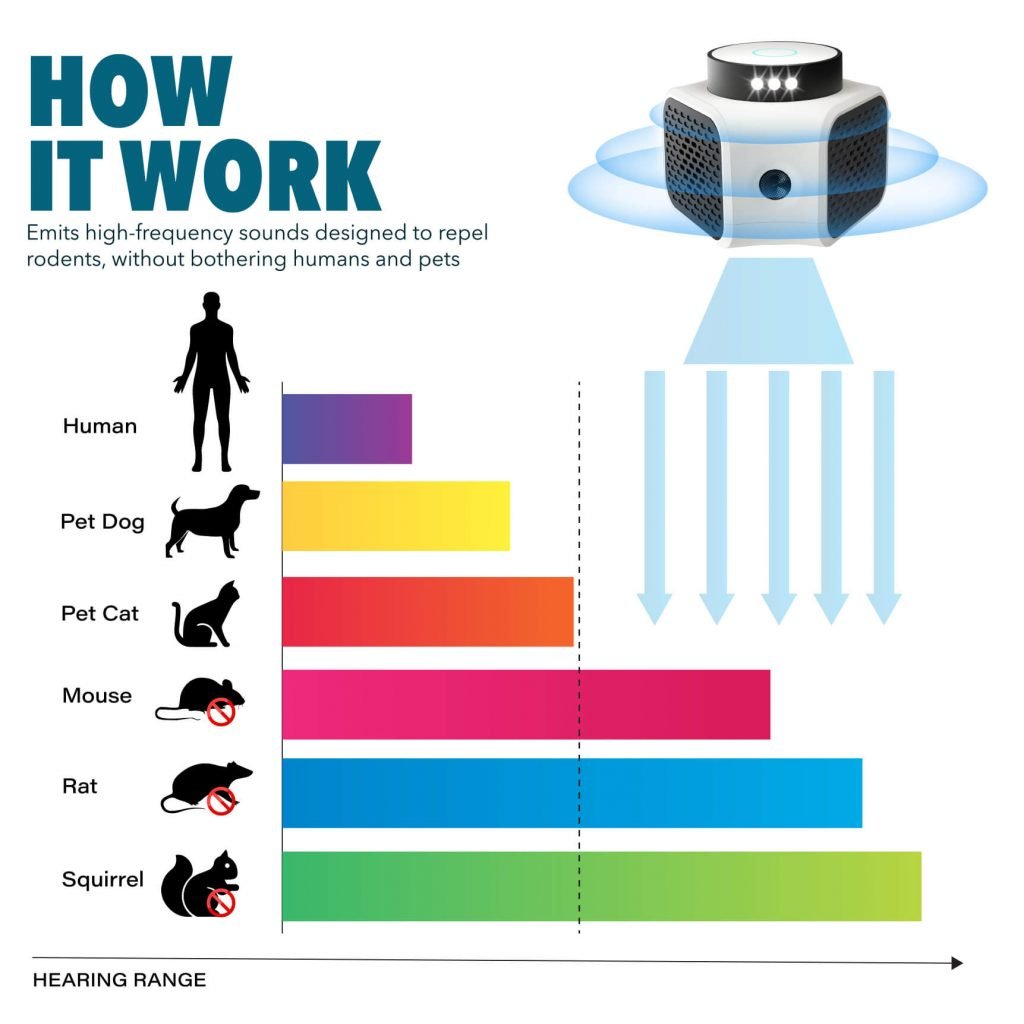
Ultrasonic pest repellers are small electronic devices that emit high-frequency sound waves.
These sounds are inaudible to humans but can be perceived by pests such as rodents, insects, and, allegedly, bats.
The idea is that these high-pitched sounds cause discomfort or disorientation in pests, driving them away from your home.
Ultrasonic pest repellers work by emitting sound waves at a frequency higher than 20,000 Hz, which is above the range of human hearing. The operating frequency of these devices usually falls between 20 kHz and 65 kHz. It’s believed that:
When considering ultrasonic pest repellers for bats, it’s important to evaluate their effectiveness based on scientific evidence and user testimonials.
Scientific evidence on the effectiveness of ultrasonic pest repellers on bats is still inconclusive.
While bats do use echolocation to navigate, the sound wavelengths used in echolocation are typically lower than the frequencies emitted by most ultrasonic pest repellers.
Several studies have found that:
User experiences with ultrasonic pest repellers and bats vary widely. Some homeowners report success, especially in the initial stages of using the devices. Others find little to no effect, implying that bats may grow accustomed to the sound over time.
Even if ultrasonic pest repellers show some initial success, there are notable limitations:
If ultrasonic pest repellers aren’t delivering the results you hoped for, there are several alternative methods to consider:
Hiring a professional pest control service specializing in bat exclusion is often the most reliable method. They will:
For a more DIY approach, consider these home remedies:
Encouraging natural predators like owls can help control bat populations. Owls are natural bat predators and offering a habitat for them can be an eco-friendly solution.
While ultrasonic pest repellers may offer a temporary solution for bats, their effectiveness is varied and often limited.
These devices may initially deter bats, but the creatures can become habituated over time. Reliable methods, such as professional bat exclusion and sealing entry points, provide more consistent results.
If you decide to try an ultrasonic pest repeller, consider it as part of a broader pest management strategy.
Always adhere to safe, humane practices when dealing with wildlife to ensure the well-being of both your family and the animals involved.
29 more replies


Has anyone tried using ultrasonic pest repellers for bats? I’ve heard mixed reviews and I don’t want to harm the bats, just encourage them to move elsewhere.
I’m pretty sure ultrasonic devices are hit-or-miss. Bats have sensitive hearing, but these gadgets sometimes don’t have the right frequency to affect them.
Actually, many of these devices are not effective. Bats are more complex than just being deterred by high frequencies.
As a biologist specializing in chiropterology, I can confirm that most commercial ultrasonic repellers are barely effective on bats. Bats’ echolocation is highly adaptable and can often ignore these frequencies.
Yet another marketing gimmick! I’ve observed bats comfortably roosting in areas with these repellers.
Yes, agreed on that.
Can confirm that bats weren’t phased by my ultrasonic repeller. Thought it was a silent solution, but it just doesn’t seem to cut it.
I’ve read that ultrasonic devices are not very effective with bats because bats’ hearing adapts quickly. Plus, the frequency needed to repel bats without affecting pets can be tricky to balance.
That’s been my understanding as well. Bats are really important for the ecosystem, though, so maybe it’s best not to repel them?
I think we should focus on non-invasive methods. Our efforts should be about coexistence rather than repelling wildlife