
Cleaning Is the First Step, Not Always the Final Step
July 23, 2026
4 min read time
This information is reviewed by an independent pest control expert.
All external links are non-affiliated and for informational purposes only
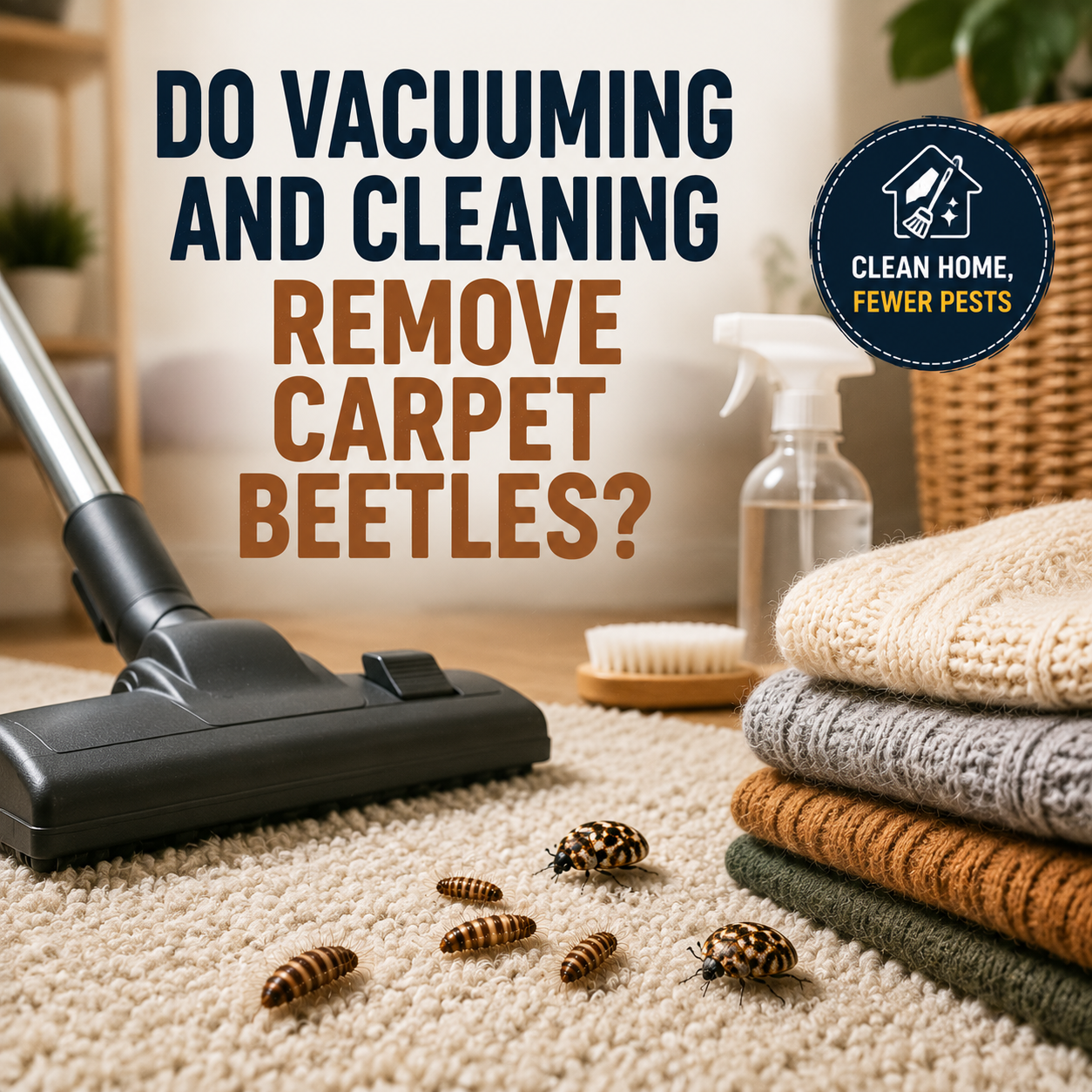
You notice a few tiny beetles near your carpet or discover small holes appearing in your clothes.
Your first reaction is simple:
“I’ll clean everything thoroughly. That should get rid of them.”
So you vacuum the floors, wash your fabrics, and tidy up the room.
For a while, things seem better.
But then you notice another larva near the baseboard—or another damaged piece of clothing.
Now you start wondering:
“Can vacuuming and cleaning really remove carpet beetles, or am I only treating the surface?”
The truth is that cleaning is one of the most important steps in controlling carpet beetles, but it may not always be enough by itself.
In this guide, we’ll explain how vacuuming and cleaning affect carpet beetle infestations, what areas need the most attention, and when additional treatment may be necessary.
Carpet beetles are often found in areas where dust, fibers, and organic materials accumulate.
Their larvae feed on materials such as:
Because many of these food sources are found in hidden areas, regular cleaning plays an important role in reducing their ability to survive.
However, carpet beetles are not always living in the places homeowners expect.
They may hide:
This is why cleaning must be thorough and targeted.
Vacuuming is one of the most effective first steps for reducing carpet beetle activity.
A thorough vacuuming routine can help remove:
Larvae are often found:
Removing them early can reduce damage.
Vacuuming can also remove:
These materials often support future infestations.
One major benefit of vacuuming is reducing what larvae feed on.
Removing:
makes the environment less attractive to carpet beetles.
While cleaning is extremely helpful, it is important to understand its limits.
✔ Removing visible larvae
✔ Reducing food sources
✔ Cleaning contaminated fabrics
✔ Improving prevention
❌ Hidden larvae inside furniture
❌ Eggs in inaccessible areas
❌ Beetles inside stored items
❌ Infestations spread throughout the home
This is why some homeowners continue seeing carpet beetles even after deep cleaning.
Many infestations continue because homeowners focus only on open areas.
Pay special attention to:
Especially areas containing:
These areas collect:
and often go undisturbed.
Larvae frequently travel and hide along edges.
Check:
Long-term storage provides ideal hiding conditions.
Pet hair and dander can provide food sources for larvae.
Many homeowners feel frustrated when carpet beetles come back after cleaning.
This usually happens because:
Some larvae remain in places that are difficult to access.
Cleaning may reduce active insects but may not remove every egg.
Adult carpet beetles can enter through:
Even small amounts of organic debris can support larvae.
For better results:
Focus on:
Clean:
when possible.
Use sealed containers for:
Regular maintenance reduces available food sources.
Continue checking for:
Cleaning may not solve the problem completely if:
In these cases, homeowners may need a more comprehensive approach that combines cleaning, monitoring, and targeted pest control methods.
So, do vacuuming and cleaning remove carpet beetles?
The answer is:
They can significantly reduce carpet beetle activity—but they may not eliminate every infestation by themselves.
Cleaning works because it removes:
But long-term control requires understanding where carpet beetles are coming from and why they continue to survive.
The most effective approach combines:
Because with carpet beetles, a clean home is an important advantage—but knowing where they hide is what makes the biggest difference.