
Each type of fly has its unique characteristics, behaviors, and control methods, so understanding these differences is crucial.
January 3, 2026
5 min read time
This information is reviewed by an independent pest control expert.
All external links are non-affiliated and for informational purposes only
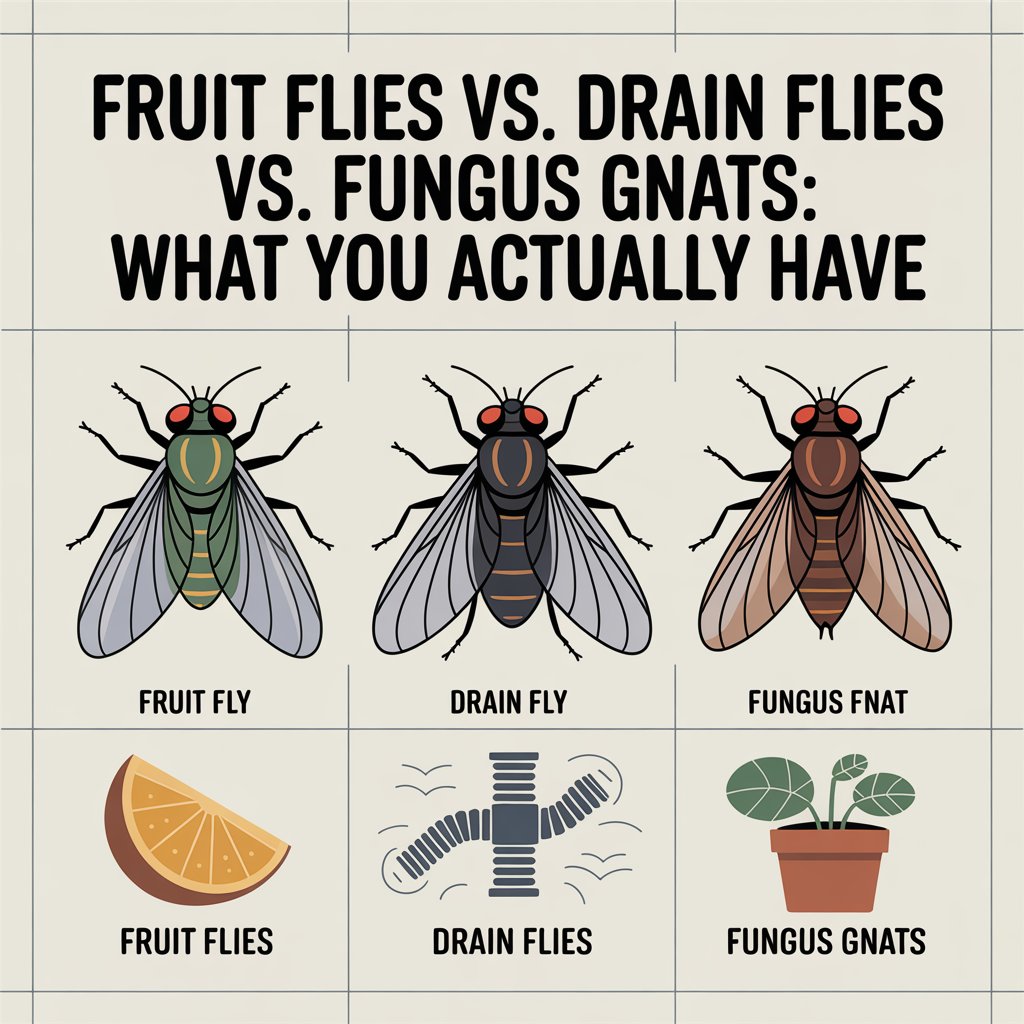
Have you ever walked into your kitchen and spotted little flying insects buzzing around? Are you left scratching your head, wondering whether you’re dealing with fruit flies, drain flies, or fungus gnats? You’re not alone! These tiny pests can be quite bothersome and identifying them can be tricky. However, understanding the differences between these three types of flies can help you take the right steps to eliminate them from your home. In this article, we’ll unravel the mysteries of these pests and provide you with the knowledge to tackle them head-on.
Fruit flies (Drosophila melanogaster) are small, common pests that are often found in homes, particularly in kitchens where ripe or rotting fruit is present. These flies are typically tan or light brown with red eyes, and they thrive in environments where fermentation occurs. Fruit flies are attracted to sugary substances, making your fruit bowl, wine glass, or even spilled soda prime targets for their attention.
Drain flies (Psychodidae family) are also known as moth flies or sink flies. They are slightly larger than fruit flies, with a fuzzy, moth-like appearance and wings that resemble a delicate, grayish-brown moth. You’ll usually find them near damp areas, like sinks, showers, and drains, particularly where organic material is decomposing. Their presence often indicates a moisture issue in your plumbing.
Fungus gnats (Bradysia spp.) are small, dark-winged insects that resemble fruit flies but are typically darker in color. They are commonly found in houseplants, especially those that are overwatered or have poor drainage. Fungus gnats are attracted to the moist soil where they lay their eggs, and their larvae feed on the fungi and organic material in the soil.
The life cycle of a fruit fly can complete in as little as 8 to 10 days under ideal conditions. The stages include:
Drain flies have a life cycle that lasts about 1 to 3 weeks. The stages include:
Fungus gnats’ life cycle is similar to fruit flies and lasts about 3 to 4 weeks. The stages include:
Fruit flies are attracted to:
Drain flies thrive in:
Fungus gnats are often found in:
To keep these pesky flies at bay, consider the following preventive measures:
Identifying whether you have fruit flies, drain flies, or fungus gnats is the first step in effectively handling an infestation. Each type of fly has its unique characteristics, behaviors, and control methods, so understanding these differences is crucial. By keeping your home clean and following the tips outlined in this article, you can keep these pests at bay.
Remember, knowledge is power! Equip yourself with the information you need to take action, and you’ll soon be well on your way to a fly-free home. Happy pest control!