
With the right approach—thorough cleaning, proper treatment, and consistent prevention.
April 1, 2026
4 min read time
This information is reviewed by an independent pest control expert.
All external links are non-affiliated and for informational purposes only
Picture this: you’re getting dressed for the day and notice a small hole in your favorite sweater. You shrug it off—maybe it’s just wear and tear.
A few days later, you spot another one. Then another.
Before you know it, it’s not just one item—it’s multiple fabrics around your home showing signs of damage.
Welcome to one of the most overlooked household pests: carpet beetles.
Unlike more obvious infestations, carpet beetles tend to stay hidden until the damage becomes noticeable. And by then, they’re often more widespread than you think.
In this guide, we’ll break down what makes carpet beetles so persistent, real situations homeowners face, and the exact steps you can take to eliminate them effectively.
Before diving into solutions, it’s important to understand what you’re dealing with.
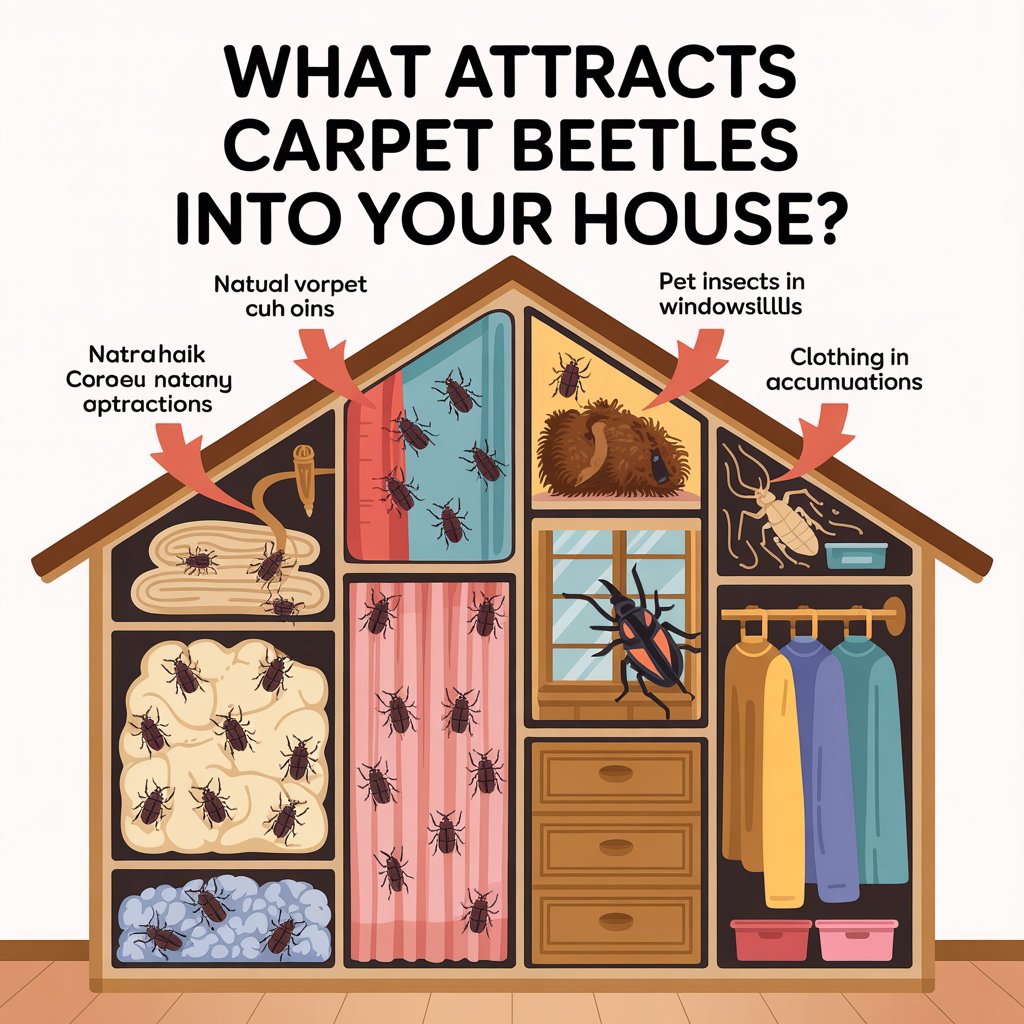
Carpet beetles are small insects that feed on natural materials such as:
Interestingly, the adult beetles are mostly harmless.
The real damage comes from their larvae—tiny, bristly insects that feed on fabrics and organic debris.
Carpet beetles aren’t difficult because they’re aggressive—they’re difficult because they’re easy to overlook.
Here’s why they’re so persistent:
This combination makes them one of the most frustrating pests to deal with.
To understand how these infestations actually play out, here are a few common scenarios that reflect real-world situations.
A homeowner noticed minor damage on a single piece of clothing and didn’t think much of it.
Weeks later, multiple items in the same closet were affected.
What happened:
The infestation had already spread within the storage area before the first sign was noticed.
Key takeaway:
Early signs are often misleading—damage usually means activity has been there for a while.
Seasonal clothing stored for months became the perfect breeding ground.
Inside the closet:
What caused it:
A dark, undisturbed environment filled with natural fibers.
Key takeaway:
Carpet beetles thrive where there is little disturbance.
In some homes, everything appears clean—but the problem keeps returning.
Often, the real issue is hidden:
Key takeaway:
If the source isn’t removed, the infestation will continue.
Based on these real situations, here’s what actually works.
Vacuum thoroughly:
This step removes larvae, eggs, and food sources.
All affected materials should be:
For delicate items:
This is the most critical step.
Look for:
Without removing the source, the problem will return.
In many cases, cleaning alone may not fully stop the cycle.
Homeowners often use:
These methods help manage areas that are difficult to clean regularly.
One of the biggest misconceptions is that a quick clean will solve the problem.
In reality, carpet beetle control requires:
Skipping steps or rushing the process is one of the main reasons infestations return.
Once the problem is under control, prevention becomes the priority.
Here are a few simple but effective habits:
Small habits can make a big difference over time.
Carpet beetles may not be the most noticeable pests, but they can cause significant damage if ignored.
What makes them tricky isn’t their size—it’s how easily they go unnoticed.
The good news?
With the right approach—thorough cleaning, proper treatment, and consistent prevention—you can completely eliminate them and protect your home long-term.
If you’re starting to see early signs, don’t wait.
The sooner you act, the easier it is to stop the problem before it spreads.