
Mice are persistent, but with the right strategy, homeowners can regain control of their living space.
July 27, 2026
5 min read time
This information is reviewed by an independent pest control expert.
All external links are non-affiliated and for informational purposes only
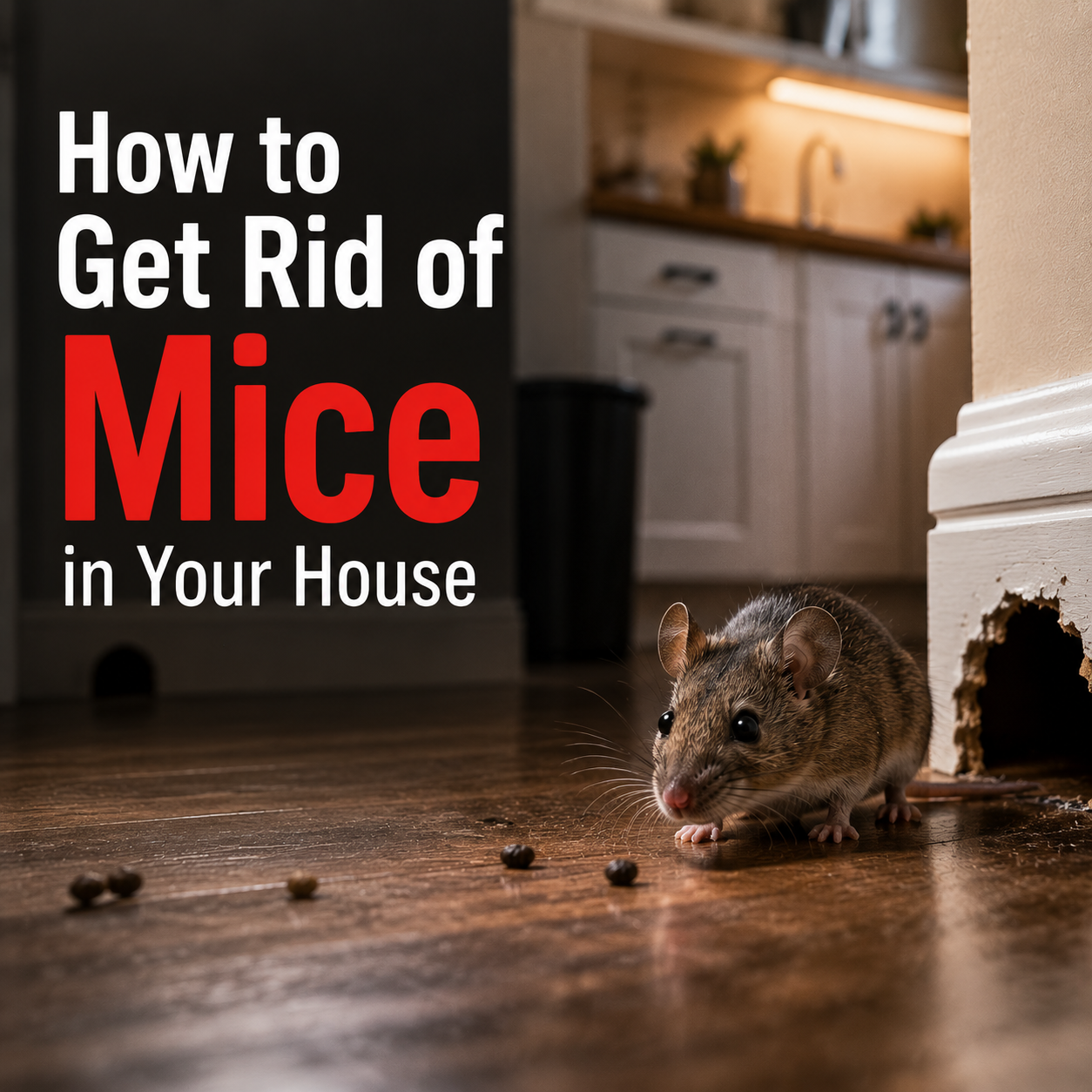
It’s late at night, and you’re relaxing at home when you hear a strange scratching sound coming from the wall.
At first, you ignore it.
Maybe it’s just the house settling.
But then you notice:
And suddenly, you start asking:
“Do I have mice in my house? And how do I get rid of them?”
Finding mice indoors can be frustrating. They reproduce quickly, hide extremely well, and can cause damage long before homeowners realize they are present.
The good news is that most mouse infestations can be controlled when you take the right steps.
In this guide, we’ll explain how to identify a mouse problem, remove existing mice, prevent them from returning, and create a less attractive environment for rodents.
Mice may look small and harmless, but they can quickly become a serious household problem.
A single mouse can:
The biggest challenge is that mice are experts at staying hidden.
Many homeowners only notice a problem after the infestation has already developed.
That is why effective mouse control requires more than simply catching one mouse—it requires removing the conditions that allow them to survive.
Before trying to remove mice, it is important to confirm that they are actually present.
Common signs include:
Mouse droppings are often found near:
Mice are usually most active at night.
You may hear:
Mice may chew:
Mice build nests using:
These are often hidden in quiet areas.
Mice usually enter homes for three main reasons:
Common attractions include:
Homes provide protection from:
Mice need access to moisture.
Sources may include:
One of the most important steps in mouse control is preventing new mice from entering.
Mice can squeeze through surprisingly small openings.
Inspect:
Seal these areas using appropriate materials designed to block rodents.
Without this step, new mice may continue entering even after successful removal.
A home with easily available food is much more attractive to mice.
To reduce attraction:
Use sealed containers for:
Remove:
Keep garbage:
There are several approaches homeowners use to control mice.
Traditional traps can be effective when placed correctly.
Best locations include:
Electronic traps use a quick electrical mechanism to eliminate mice without requiring direct contact.
Advantages may include:
These capture mice without immediately killing them.
However, homeowners must consider:
Professional help may be needed when:
After removing mice, cleaning is important.
Focus on:
Remove:
Always use proper cleaning practices when handling rodent waste.
Long-term prevention is the most important part of mouse control.
Inspect your home periodically for new gaps.
Continue using sealed containers.
Mice prefer areas where they can hide.
Reduce:
Keep areas around your home less attractive by managing:
Seeing one mouse often means there may be others nearby.
Removing mice without sealing access points often leads to repeat infestations.
Strategic placement is usually more important than simply adding more traps.
Mice reproduce quickly, so early action can prevent a larger problem.
Getting rid of mice in your house is not just about catching the rodents you see.
The most effective approach combines:
Mice are persistent, but with the right strategy, homeowners can regain control of their living space.
Because the best mouse control solution is not only removing the current problem—it is making sure mice have no reason to come back.