
Not fighting wildlife—but removing the reasons they stay.
April 27, 2026
3 min read time
This information is reviewed by an independent pest control expert.
All external links are non-affiliated and for informational purposes only
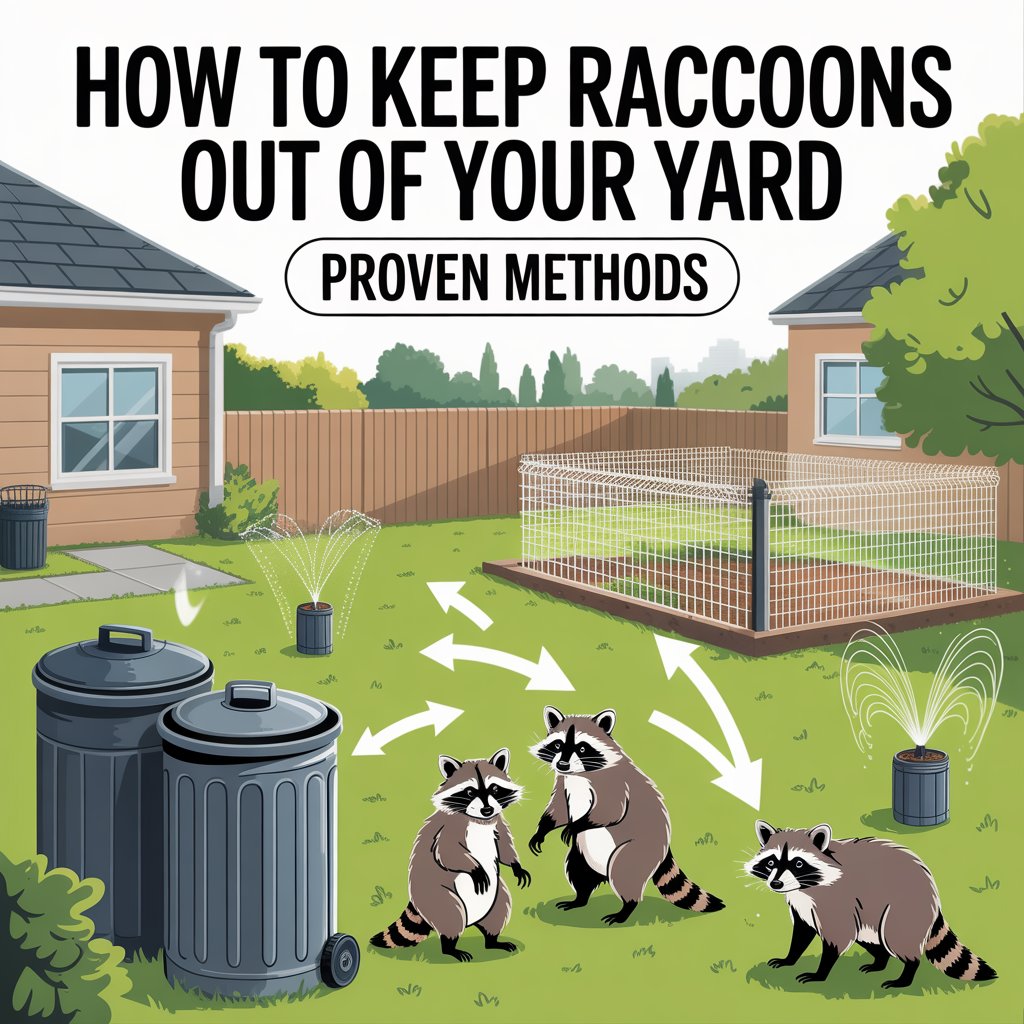
You step outside in the morning and notice something’s off.
A tipped-over trash can. Scattered debris. Maybe even disturbed soil in your garden.
At first, it’s confusing.
But after it happens again—and again—you start to suspect something bigger.
That’s when most homeowners realize:
This might be a raccoon.
Raccoons are smart, persistent, and surprisingly adaptable. Once they find a reliable food source, they tend to come back.
In this guide, we’ll break down why raccoons are attracted to your yard, what actually works to keep them away, and how to prevent them from returning.
Raccoons don’t randomly choose your yard.
They come because it offers something valuable:
If those conditions remain, they’ll keep returning—no matter how many times you scare them off.
Understanding this is key to stopping them.
Raccoons are drawn to:
Even small, consistent food sources can keep them coming back.
If you’re not sure, look for these signs:
These patterns often repeat once raccoons settle in.
To stop raccoons effectively, the goal is simple:
? Remove what attracts them and make your yard less accessible
This is one of the biggest factors.
Raccoons prefer quiet, undisturbed spaces.
These can make your yard less comfortable for them.
Check for access to:
Seal or block these areas to prevent nesting.
Less cover = less comfort for wildlife.
These are the main reasons raccoons keep returning.
Raccoons aren’t trying to cause problems—they’re simply looking for easy opportunities.
If your yard provides food, water, and shelter, they’ll keep coming back.
But once those factors are removed, your yard becomes far less appealing.
And that’s the key to long-term control:
? Not fighting wildlife—but removing the reasons they stay.