
Remember to assess the situation, wear protective clothing, and choose the right time for removal.
March 16, 2026
6 min read time
This information is reviewed by an independent pest control expert.
All external links are non-affiliated and for informational purposes only
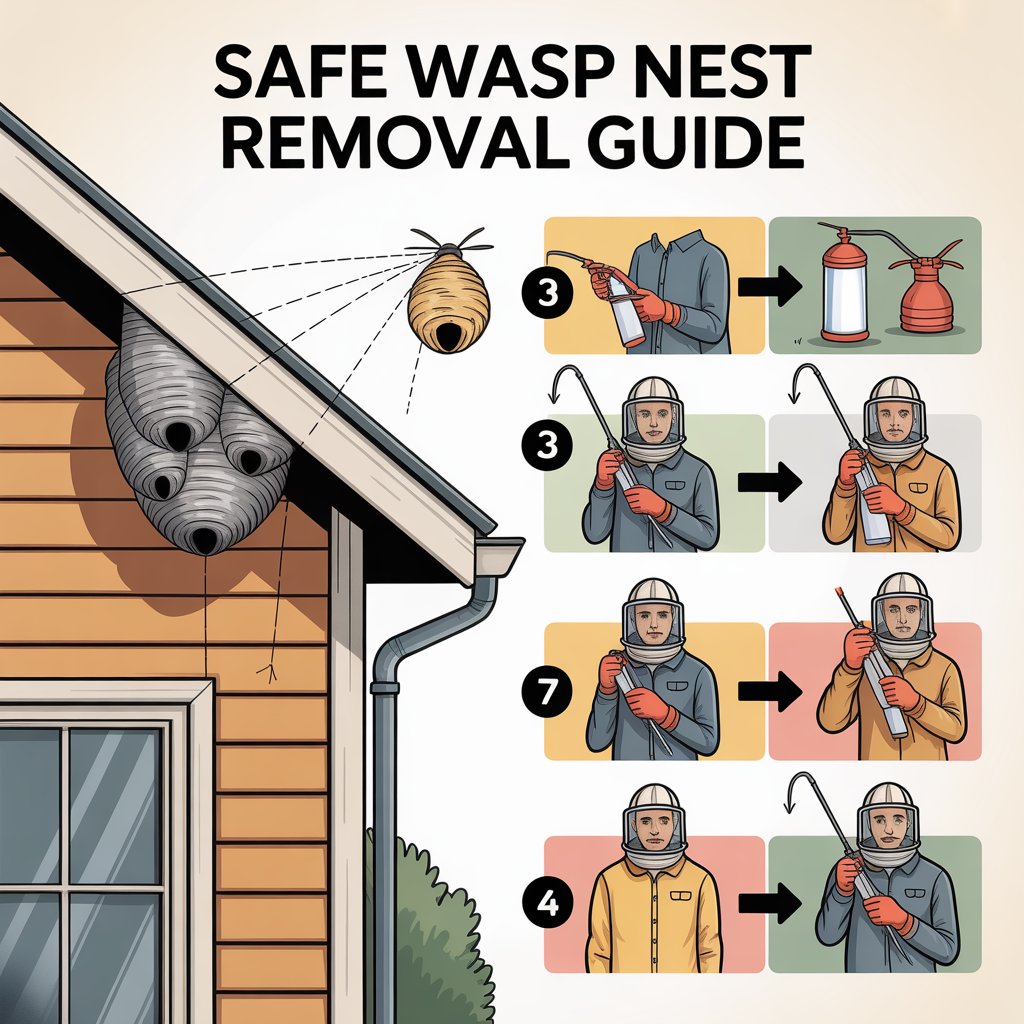
When the warm weather rolls in, many of us look forward to enjoying outdoor barbecues, picnics, and lazy afternoons in the sun. However, there’s one unwelcome guest that can quickly ruin your plans: wasps. If you’ve noticed a wasp nest hanging in your eaves, under your deck, or in your garden, you may be wondering how to remove it safely. Not only do wasps pose a threat with their painful stings, but a nest can also become a significant inconvenience. Fear not! In this comprehensive guide, we’ll walk you through the safest ways to remove a wasp nest, ensuring you can reclaim your outdoor space without unnecessary risk.
Before we dive into removal methods, let’s take a moment to understand these insects. Wasps play a crucial role in the ecosystem. They are natural pest controllers, feeding on various insects that can damage your garden. However, when they build their nests too close to human activity, they can become a nuisance.
There are several types of wasps, but the most common ones you might encounter include:
Understanding the type of wasp you’re dealing with can help you choose the best removal method.
Before you start planning your attack on the wasp nest, make sure you confirm that you have one. Here are some signs:
Removing a wasp nest can be dangerous, so taking the proper precautions is essential. Here are some tips to ensure your safety:
Before you start, gather the following tools:
Now that you’re prepared, let’s go through the steps to safely remove a wasp nest.
Before taking action, assess how large the nest is and how many wasps are present. If it’s a small, accessible nest and you’re feeling confident, proceed. If it’s large or in a difficult location, consider hiring a professional.
If you prefer a more natural approach or want to avoid chemical sprays, consider these alternative methods:
Mix two tablespoons of dish soap with water in a spray bottle. This method suffocates wasps upon contact. Spray it directly onto the nest in the evening when wasps are less active.
Wasps dislike peppermint oil. Mix a tablespoon of peppermint oil with water and spray it around the nest and entry points. This can deter wasps from returning.
If the nest is large or you feel uncomfortable, it’s best to call in professionals. Pest control experts have the right equipment and experience to remove the nest safely.
Once you’ve successfully removed a wasp nest, it’s crucial to take steps to prevent new ones from forming. Here are some effective tips:
Inspect your home for any cracks or gaps and seal them with caulk or other materials. This will help keep wasps from building nests inside your walls or attic.
When eating outdoors, keep food and drinks covered. Wasps are attracted to sweet foods and beverages, so be mindful of spills and crumbs.
If you have a compost pile or garbage cans, keep them covered and away from your home. This will minimize the chances of attracting wasps.
Consider planting mint, citronella, or wormwood around your home. These plants are known to deter wasps naturally.
Removing a wasp nest can be a daunting task, but with the right knowledge and precautions, you can do it safely. Remember to assess the situation, wear protective clothing, and choose the right time for removal. If at any point you feel uncomfortable, don’t hesitate to call a professional. Once the nest is gone, take steps to prevent future infestations, ensuring you can enjoy your outdoor spaces without fear.
By being informed and cautious, you can handle the situation effectively and reclaim your yard from these buzzing intruders. Happy outdoor living!