
The sooner you recognize the signs and address the source, the easier it becomes to protect your home from damage and future infestations.
July 27, 2026
5 min read time
This information is reviewed by an independent pest control expert.
All external links are non-affiliated and for informational purposes only
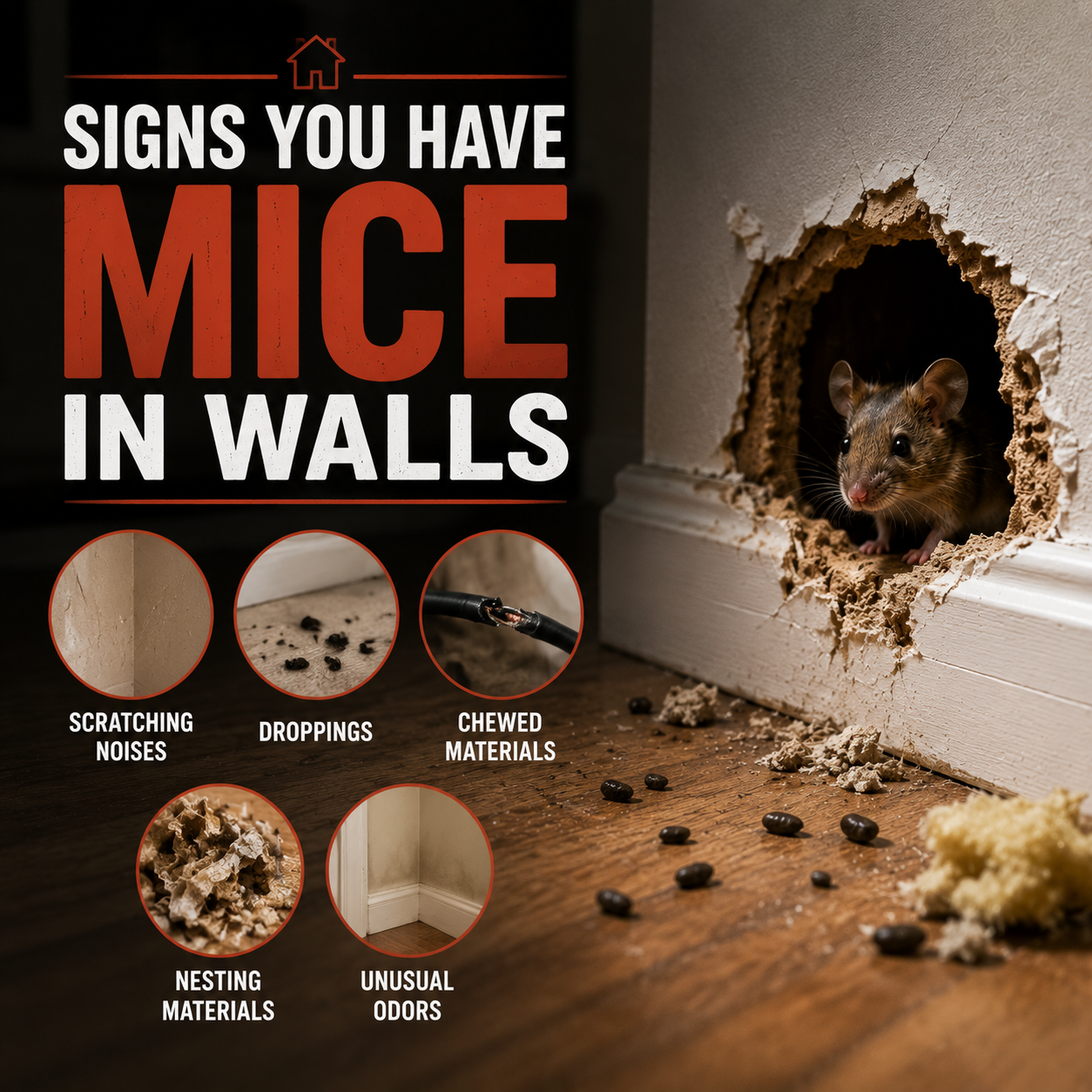
It’s late at night, and your house is completely quiet.
Then you hear it.
A faint scratching sound coming from behind the wall.
At first, you tell yourself it’s probably nothing.
Maybe the house is settling.
Maybe it’s just pipes making noise.
But then it happens again.
And again.
Soon, you start noticing other clues:
And one question keeps coming back:
“Could there be mice living inside my walls?”
Mice are experts at staying hidden. They can move through tiny spaces, build nests inside wall cavities, and remain unnoticed for long periods.
The challenge is that by the time you hear them, they may already be established inside your home.
In this guide, we’ll explain the most common signs of mice in walls, why they enter wall spaces, and what homeowners can do to address the problem before it becomes worse.
Walls provide mice with exactly what they need:
Wall cavities are especially attractive because mice can travel through:
Once inside, they may create nests and move between rooms without being seen.
One of the most common signs of mice inside walls is unusual noise.
Homeowners often describe sounds such as:
These sounds are usually more noticeable:
Mice are primarily nocturnal, meaning they are most active when the house is quiet.
You may hear movement:
Mice often travel toward areas where food is available.
Pay attention if sounds occur near:
Even if mice are hiding inside walls, they often leave evidence nearby.
Look for small dark droppings around:
Finding droppings along walls is especially common because mice naturally travel close to edges for protection.
Mice constantly chew because their teeth continue growing throughout their lives.
Signs of chewing may include:
Electrical damage is especially concerning because rodents may damage wiring hidden behind walls.
A persistent strange smell can also indicate mouse activity.
Possible odors include:
These smells may become stronger if mice:
Mice build nests using soft materials.
Common nesting materials include:
You may find these materials:
A nearby nest often indicates active mouse activity.
Mice enter wall spaces because they provide ideal living conditions.
Walls keep mice hidden from:
Mice can move between:
without being noticed.
Walls near kitchens or storage areas often provide access to:
Look for:
Check areas where mice may enter:
Store food properly:
Depending on the situation, homeowners may consider:
Placement is important because mice often travel along walls and edges.
Small noises can become a larger infestation if ignored.
If mice are already inside walls, sealing entry points without addressing the infestation may trap them indoors.
Seeing one mouse often means there may be additional activity nearby.
Chewed wires should always be taken seriously.
Long-term prevention focuses on making your home less attractive.
Inspect:
Store:
in sealed containers.
Remove hiding places such as:
Reduce access around:
Finding signs of mice in walls can be unsettling, but identifying the problem early makes control much easier.
The most common warning signs include:
Mice rarely disappear on their own.
The sooner you recognize the signs and address the source, the easier it becomes to protect your home from damage and future infestations.
Because with rodents, early action is always better than waiting until the problem becomes obvious.