
From liquid chemical treatments to fumigation, each option has its pros and cons.
November 3, 2025
6 min read time
This information is reviewed by an independent pest control expert.
All external links are non-affiliated and for informational purposes only
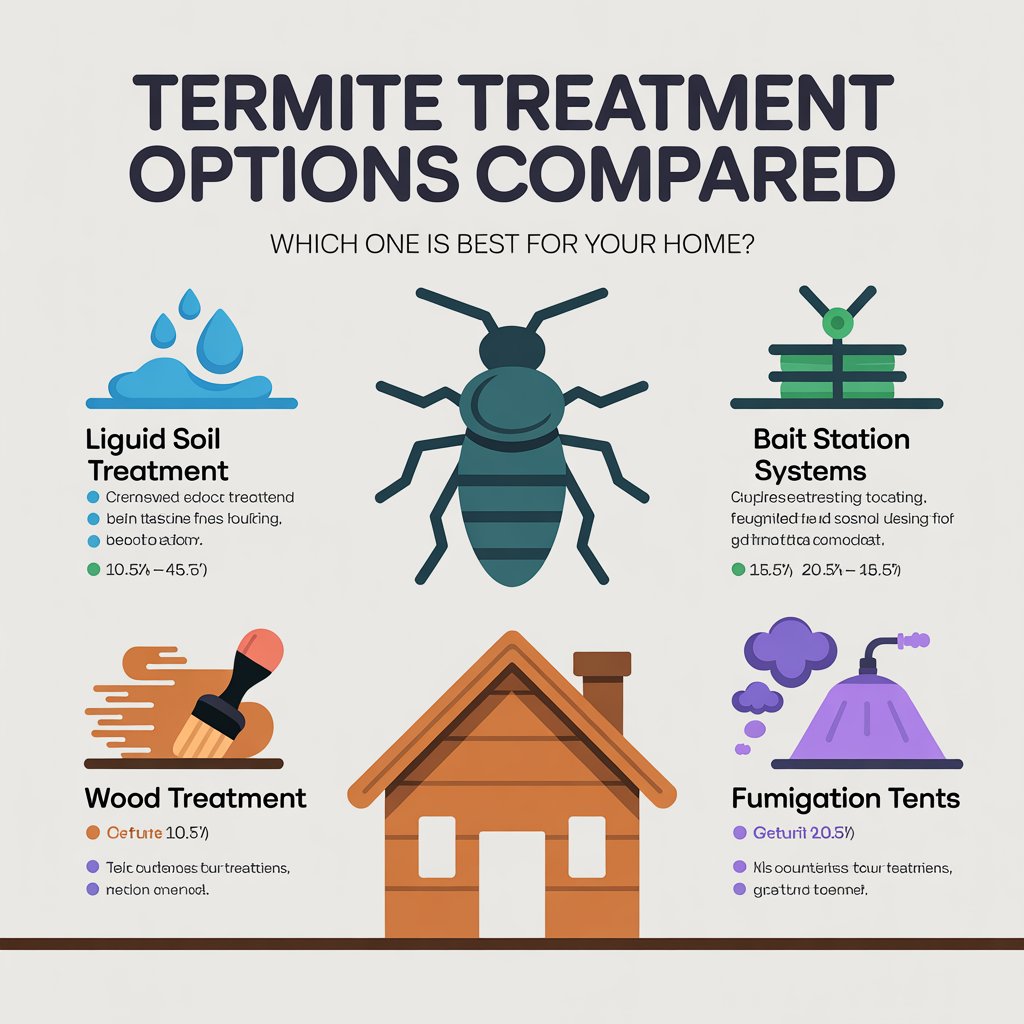
Termites might be small, but they can wreak havoc on your home, silently chewing through wood and compromising your structural integrity. If you suspect a termite infestation or want to prevent one, knowing your treatment options is essential. In this article, we will explore the various termite treatment options available, compare their effectiveness, and help you find the best solution for your home.
Before we dive into treatment options, it’s crucial to understand why acting quickly is vital. Termites can cause thousands of dollars in damage in just a short period. In fact, the National Pest Management Association estimates that termites cause over $5 billion in damage annually in the United States alone. Therefore, early detection and treatment are key to safeguarding your home.
To choose the right treatment, it’s vital to identify the type of termite you’re dealing with. There are three main types of termites:
Understanding the type of termites infesting your home will inform your treatment choice.
Overview: Liquid chemical treatments, often referred to as “soil treatments,” involve applying a pesticide to the soil around your home. This helps create a barrier that prevents termites from entering.
Pros:
Cons:
Best For: Homeowners looking for a cost-effective, long-term solution to prevent subterranean termites.
Overview: Baiting systems consist of strategically placed bait stations around your property. These stations contain a slow-acting insecticide that termites feed on and bring back to their colony, effectively eliminating it over time.
Pros:
Cons:
Best For: Homeowners who prefer a less invasive method and are willing to wait for results.
Overview: Fumigation is a comprehensive treatment method that involves sealing the home and introducing a gas that penetrates all wood surfaces, effectively eliminating drywood termites.
Pros:
Cons:
Best For: Homeowners dealing with severe infestations, particularly drywood termites.
Overview: Borate is a natural mineral that can be applied to wood surfaces either before or after construction. It works by preventing termites from digesting wood.
Pros:
Cons:
Best For: New constructions or homes looking to prevent infestations.
Overview: Heat treatments involve raising the temperature of the infested area to a level that is lethal to termites. This is done using specialized equipment and is effective for localized infestations.
Pros:
Cons:
Best For: Homeowners with localized infestations looking for an eco-friendly solution.
Overview: Some homeowners may opt for essential oils and natural remedies, such as nematodes or diatomaceous earth, to combat termites. While these methods may have some effectiveness, they are generally less reliable.
Pros:
Cons:
Best For: Homeowners looking for natural options or those with minimal infestations.
When deciding on the best termite treatment for your home, consider the following factors:
Identify the type of termite you are dealing with. Subterranean termites may require different treatments than drywood termites.
Evaluate the severity of your infestation. If you have a significant infestation, you may need to invest in more comprehensive treatments like fumigation.
Consider your budget. Some treatments, like liquid chemical treatments, are more cost-effective, while fumigation can be quite expensive.
Some treatments take longer to show results than others. If you need a quick solution, you may want to consider heat treatments or fumigation.
If you prefer eco-friendly options, look for treatments that use natural ingredients, such as borate or essential oils.
Once you’ve dealt with a termite problem, it’s essential to take preventive measures to avoid future infestations. Here are some tips to help protect your home:
Choosing the right termite treatment for your home can feel overwhelming, but understanding your options is the first step in protecting your home from these destructive pests. From liquid chemical treatments to fumigation, each option has its pros and cons. The best choice will depend on the type of termite, the extent of the infestation, your budget, and your personal preferences.
By taking proactive measures and staying informed, you can safeguard your home from termites and enjoy peace of mind. Don’t wait until it’s too late—invest in termite control today and keep your home safe for years to come!