
Sealing entry points in your home is a proactive step towards maintaining a pest-free environment.
October 29, 2025
5 min read time
This information is reviewed by an independent pest control expert.
All external links are non-affiliated and for informational purposes only
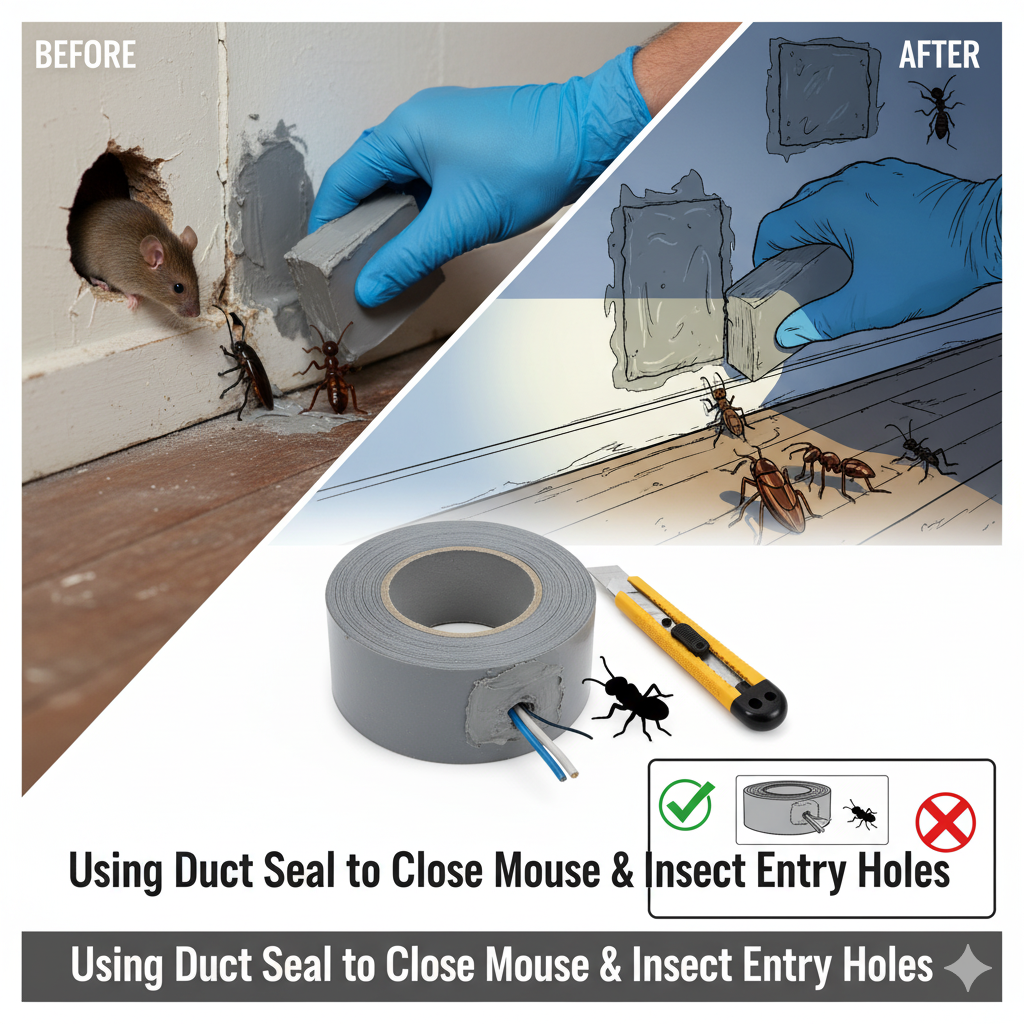
Have you ever found yourself wondering where all those pesky mice and insects are sneaking into your home from? You’re not alone! Many homeowners struggle with unwelcome critters making their way indoors, especially as the weather changes. While a clean home can deter some pests, it’s crucial to seal entry points to keep your space comfortable and critter-free. One of the most effective and versatile materials for this task is duct seal. In this article, we’ll explore what duct seal is, where to use it, and how to effectively apply it to safeguard your home against unwanted visitors.
Duct seal is a pliable, non-toxic, and durable putty-like substance primarily used for sealing HVAC ducts. However, its benefits extend far beyond just ductwork. This product is perfect for closing gaps and cracks around various areas in your home, preventing mice and insects from entering. Duct seal can easily adhere to wood, metal, plastic, and masonry, making it a go-to solution for many homeowners.
Before you can effectively seal up your home, it’s essential to know where to look. Mice and insects are crafty creatures that can squeeze through surprisingly small openings. Here are some common areas where they might enter:
Before you get started with sealing, gather the following tools and materials:
Now that you have your tools ready, let’s delve into the step-by-step process of sealing those entry points.
Start by conducting a thorough inspection of your home. Grab a flashlight and look for any potential entry points, focusing on the areas mentioned above. Make a list of where sealing is necessary.
Once you’ve identified the gaps, use a wire brush to clear away any dirt, dust, or debris. This will help the duct seal adhere better.
If you purchased duct seal in a block form, cut off a piece that’s large enough to fill the gap. If it’s in a caulk tube, load it into the caulking gun.
After applying, smooth out the duct seal with your fingers or a tool to ensure a neat finish. This not only looks better but also helps ensure a tight seal.
Duct seal typically cures quickly; however, it’s best to allow it to set for at least 24 hours before exposing it to moisture or heavy use.
To maximize the effectiveness of duct seal in your pest prevention efforts, keep these tips in mind:
While using duct seal can be a DIY project for many homeowners, there are times when calling in a professional pest control service is the best option. If you have a severe infestation or if sealing doesn’t seem to help, it might be time to seek expert assistance. Professionals can provide a more comprehensive assessment of your home and offer targeted solutions.
Sealing entry points in your home is a proactive step towards maintaining a pest-free environment. Duct seal is a versatile, durable, and easy-to-use solution for closing mouse and insect entry holes. By identifying potential entry points and applying duct seal properly, you can significantly reduce the chances of rodents and insects invading your space.
Remember, a well-sealed home not only keeps unwanted guests out but also contributes to better energy efficiency and comfort. So, roll up those sleeves, grab your duct seal, and say goodbye to those uninvited critters!