
Understanding how they get in and what attracts them is key to stopping infestations before they cause extensive damage.
June 9, 2026
3 min read time
This information is reviewed by an independent pest control expert.
All external links are non-affiliated and for informational purposes only
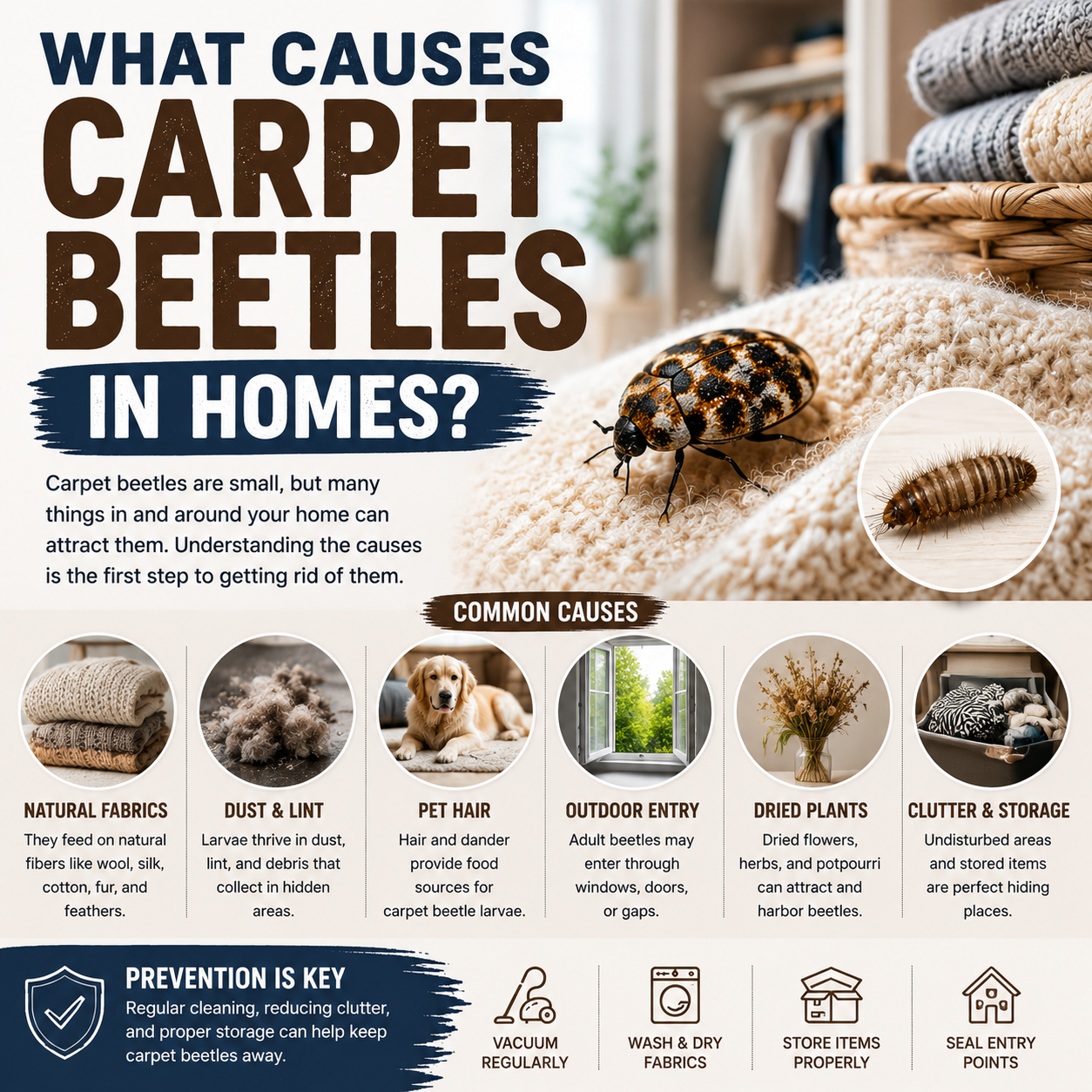
You open a closet and notice small holes in sweaters, blankets, or stored fabrics.
You glance around and see tiny insects scurrying across a carpet or hiding in the corners.
Suddenly, the question hits:
What caused this infestation—and how did carpet beetles get into my home?
Understanding what attracts carpet beetles and how they establish themselves indoors is the first step to preventing future damage.
Carpet beetles are tiny but destructive pests.
Homes provide everything they need to survive and reproduce, including:
These factors make homes a perfect breeding ground, especially in areas like closets, storage rooms, and behind furniture.
Carpet beetles often enter houses through:
Once inside, they seek out food and shelter to start laying eggs.
The larvae feed on a variety of materials, such as:
Even tiny crumbs, dead insects, or organic dust can provide enough nutrition for larvae to survive. This is why thorough cleaning is crucial.
Carpet beetles thrive in conditions often found in homes:
These environments allow them to grow unnoticed until noticeable damage occurs.
Adult carpet beetles may seem harmless—they feed primarily on pollen and nectar—but they lay eggs near food sources for larvae.
This means even occasional sightings of adults indicate potential hidden larval activity nearby.
Prevention is most effective when it targets both adults and larvae and removes potential food sources.
Carpet beetles enter homes searching for food, warmth, and shelter.
Understanding how they get in and what attracts them is key to stopping infestations before they cause extensive damage.
By identifying entry points, removing food sources, and maintaining a clean environment, homeowners can significantly reduce the likelihood of carpet beetles taking hold.