
Carpet beetles might be small, but they can cause big problems if left unchecked.
December 22, 2025
5 min read time
This information is reviewed by an independent pest control expert.
All external links are non-affiliated and for informational purposes only
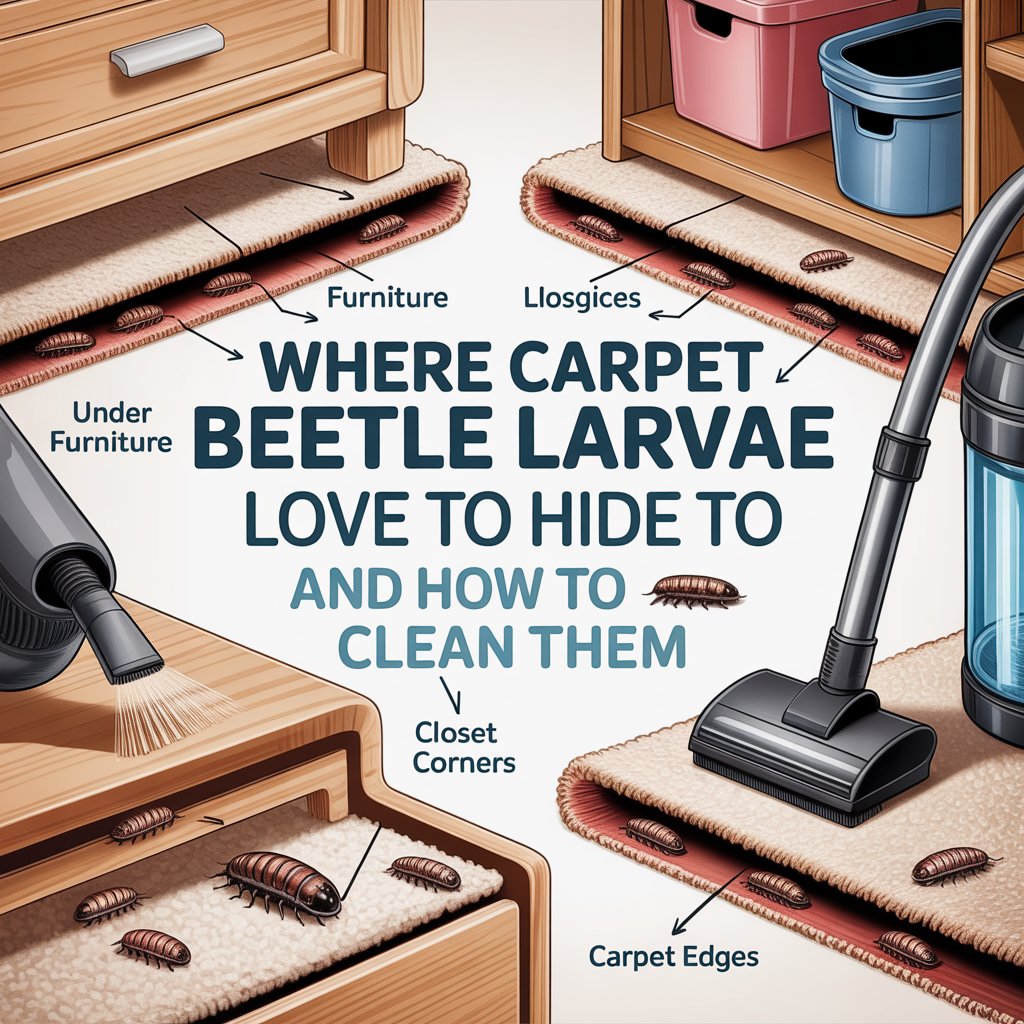
Carpet beetles might sound like a minor nuisance, but these tiny pests can wreak havoc on your home if left unchecked. If you’ve ever found mysterious holes in your favorite wool sweater or noticed strange little larvae crawling around, you might be dealing with a carpet beetle infestation. In this article, we’ll take a deep dive into where carpet beetle larvae love to hide and provide you with practical tips on how to clean and eradicate them from your living space.
Carpet beetles are small, oval-shaped insects that belong to the family Dermestidae. They come in various species, with the black carpet beetle and the varied carpet beetle being the most common in homes. Adult carpet beetles are typically about 1/8 to 1/4 of an inch long and can vary in color from black to brown, often with distinct markings.
While the adults feed on pollen and nectar, it’s the larvae that cause the most damage. These tiny caterpillar-like creatures are attracted to natural fibers and can munch through your beloved textiles, including wool, silk, and even feathers.
Understanding the life cycle of carpet beetles can help you tackle an infestation more effectively. The life cycle consists of four stages:
Knowing this cycle can help you identify when and where to take action in your home.
To effectively combat carpet beetle larvae, it’s crucial to know where they love to hide. Here are some of the most common hiding spots:
Carpets and rugs made from natural fibers are a buffet for carpet beetle larvae. They thrive in dark, undisturbed areas, often hiding in the fibers. Pay special attention to corners, edges, and under furniture where the carpet may not be regularly vacuumed.
Your beloved sofa or armchair can also be a hiding spot for these pests. Carpet beetle larvae can burrow into the seams and cushions. Areas that are less frequently used—like the back of a couch or under cushions—are prime locations for them to nest.
Closets are another favorite hiding spot, especially if you store woolen clothes or blankets. If you have a drawer that hasn’t been opened in a while, it could be a perfect home for these larvae.
Dust and debris can accumulate behind baseboards and molding, creating an ideal habitat for carpet beetles. These areas are often overlooked during cleaning, making them prime real estate for an infestation.
Dark and undisturbed spaces like attics and basements can serve as breeding grounds for carpet beetles. Old boxes, stored clothing, and forgotten treasures can all be at risk.
Believe it or not, carpet beetles don’t just love fabrics—they can also invade your pantry! They might be found in dried food items, particularly those containing natural fibers like grains, nuts, and seeds.
Now that you know where to find carpet beetle larvae, it’s time to discuss how to clean and prevent these pests from causing damage.
Vacuuming is your first line of defense! Use a vacuum cleaner with a HEPA filter for the best results. Make sure to:
For any washable items that may have been compromised, such as clothing or blankets, it’s important to:
If you’re dealing with a significant infestation, you may want to consider using insecticides. However, it’s essential to use them safely by:
Preventive measures are vital in keeping carpet beetles at bay. Here are some tips:
If you find that your efforts aren’t enough to combat a carpet beetle infestation, it may be time to call in the professionals. A pest control expert can provide a thorough inspection and recommend appropriate treatments.
Carpet beetles might be small, but they can cause big problems if left unchecked. By understanding where carpet beetle larvae love to hide and how to clean them effectively, you can protect your home and belongings from damage. Regular cleaning, proper storage of fabrics, and vigilance can go a long way in preventing these pests from making a home in your space.
Remember, when in doubt, don’t hesitate to reach out to pest control professionals for help. Keep your home safe, clean, and beetle-free!