
By maintaining cleanliness, sealing entry points, reducing moisture, and monitoring your space, you can significantly decrease the likelihood of these pests taking up residence in your home.
October 26, 2025
6 min read time
This information is reviewed by an independent pest control expert.
All external links are non-affiliated and for informational purposes only
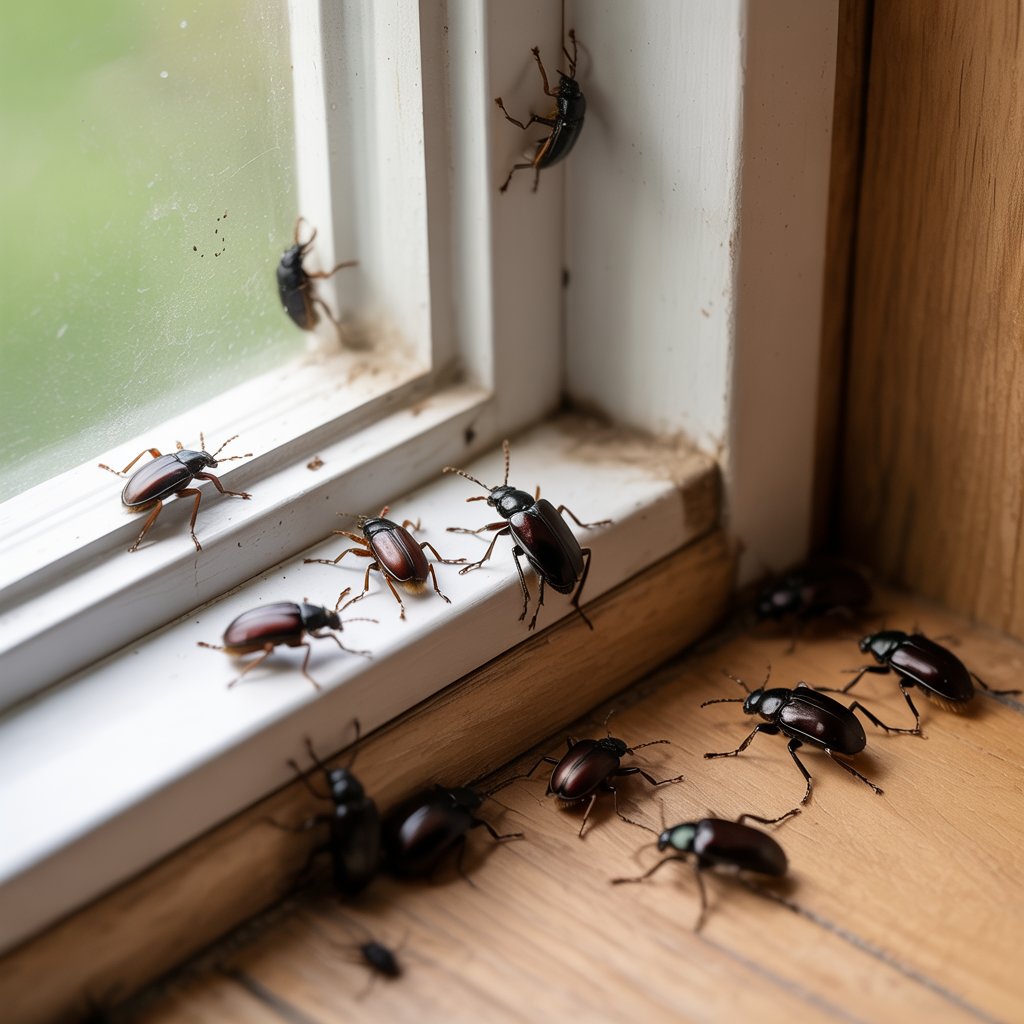
Have you ever walked into your kitchen and spotted a black beetle scurrying across the floor? Or maybe you’ve found one hiding in your pantry? If so, you’re not alone. Many homeowners find themselves in a constant battle against these little invaders. But what’s drawing them indoors, and how can you effectively deal with the situation? In this article, we’ll explore the reasons behind your indoor beetle problem, identify common types of black beetles, and provide you with practical solutions to keep your home beetle-free.
Beetles are a diverse group of insects comprising more than 350,000 species worldwide. They belong to the order Coleoptera and are characterized by their hard exoskeletons and distinctive wing covers. While many beetles play essential roles in ecosystems as decomposers or pollinators, some can become pests when they invade our homes.
Black beetles, in particular, can cause a range of issues. They might damage food supplies, contaminate stored goods, or simply be a nuisance. Understanding what attracts them and how to prevent them is key to maintaining a pest-free home.
Appearance: Carpet beetles are small, measuring about 1/8 to 1/4 inch long. They have a rounded shape and can be recognized by their mottled appearance, often featuring black, brown, and yellow scales.
Behavior: These beetles thrive on natural fibers, making carpets, wool, and even clothing their buffet. They can also lay eggs in hidden spots, which can lead to an infestation if not caught early.
Appearance: Slightly larger than carpet beetles, cigarette beetles are about 1/8 inch long and have a cylindrical body. They are reddish-brown with a distinct humped back.
Behavior: True to their name, cigarette beetles are notorious for infesting dried plant materials, including tobacco, spices, and grains. They can easily find their way into your pantry if food items are not stored properly.
Appearance: These beetles are shiny black and can grow up to 1/2 inch long. They are often mistaken for other black beetles due to their color and size.
Behavior: While primarily outdoor insects, black flower beetles can occasionally wander indoors, especially if your home has a garden or houseplants nearby. They are not harmful but can be a nuisance when they invade your living space.
Appearance: These small beetles are typically dark brown or black and measure about 1/8 to 1/4 inch long. They have long, slender bodies and are known for their unique appearance.
Behavior: Powderpost beetles are wood-boring insects, meaning they can damage wooden structures in your home. They often enter through untreated wood and can lead to significant structural problems if left unchecked.
Understanding why black beetles are making a beeline for your home is crucial for effective prevention. Here are some common factors that may be attracting these pests:
Most black beetles are highly motivated by the search for food. Here’s what to look out for:
Beetles are adept at finding cozy spots to hide and lay eggs. Common nesting sites include:
Many beetles thrive in damp environments. High humidity levels can draw them inside, particularly if there are:
As seasons change, beetles may seek refuge indoors to escape harsh weather conditions. This is particularly true in:
Now that we’ve identified the culprits and what attracts them, let’s discuss how to keep these pesky beetles at bay.
The first line of defense against black beetles is good hygiene. Here are some tips:
Preventing beetles from entering your home is key. Consider these actions:
Since many beetles are attracted to damp environments, reducing moisture in your home can help deter them:
Keeping an eye out for signs of beetles can help catch infestations early:
If you’ve tried the above methods and still find black beetles persistently invading your home, it might be time to call in the professionals:
Dealing with black beetles in your home can be frustrating, but understanding their behaviors and what attracts them is the first step toward effective prevention. By maintaining cleanliness, sealing entry points, reducing moisture, and monitoring your space, you can significantly decrease the likelihood of these pests taking up residence in your home. Should the problem persist, don’t hesitate to seek professional help.
With the right strategies in place, you can reclaim your space from these unwelcome guests and enjoy your home without the worry of beetle invasions. Remember, a little prevention goes a long way in keeping your living environment comfortable and pest-free!