
The key isn’t just reacting—it’s understanding what’s really happening.
April 27, 2026
4 min read time
This information is reviewed by an independent pest control expert.
All external links are non-affiliated and for informational purposes only
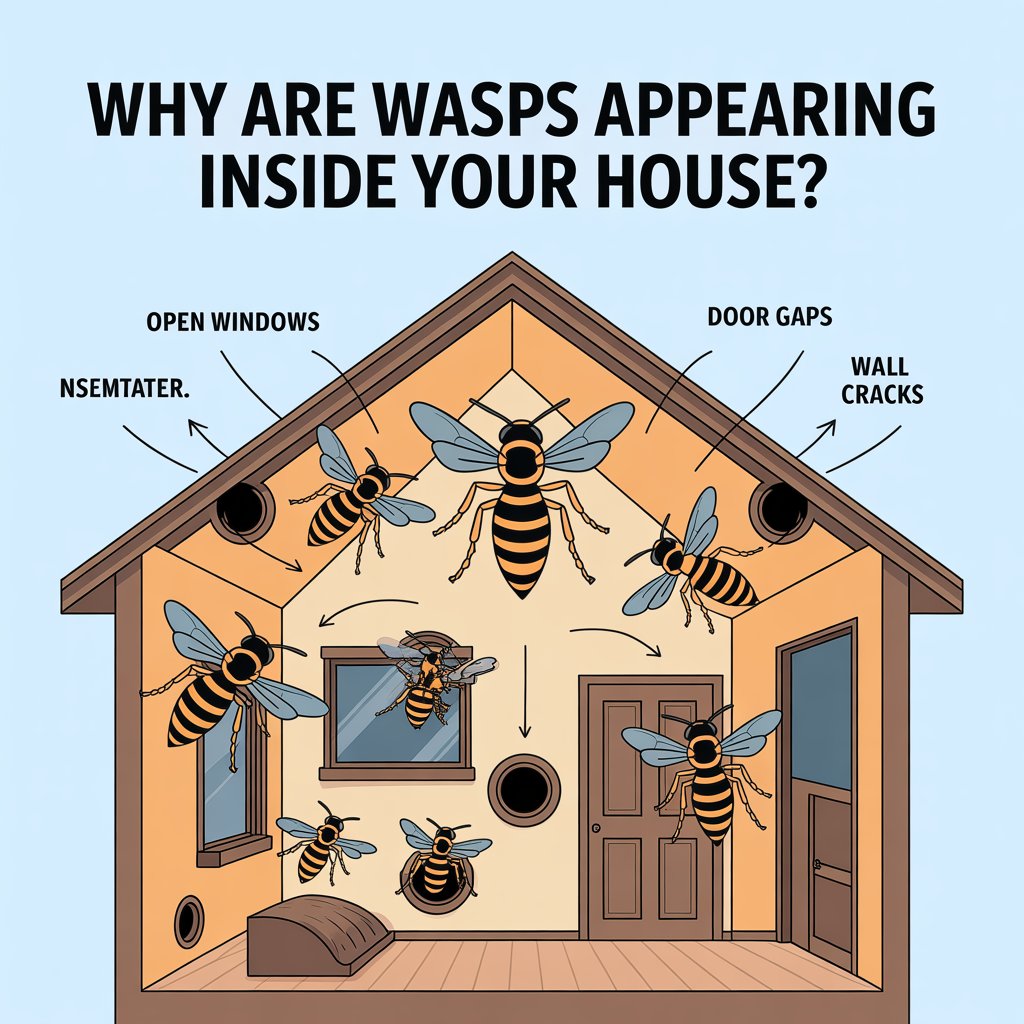
You spot a wasp inside your house.
At first, it feels random—maybe it just flew in through an open door or window.
But then it happens again.
Another one, a few days later. Maybe even two in the same week.
Now it no longer feels like coincidence.
You start wondering:
Why are wasps getting inside my house—and where are they coming from?
The truth is, wasps don’t usually appear indoors without a reason.
In this guide, we’ll break down the most common causes, what many homeowners overlook, and what these signs might actually be telling you.
Seeing a wasp indoors is unsettling—but it’s also more common than many people realize.
In most cases, it’s not random.
Wasps enter homes because:
Understanding which situation you’re dealing with is key.
Wasps don’t need much space to get in.
They can enter through:
Sometimes, they also come inside accidentally when:
This is the most common situation.
Wasps may:
If sightings are occasional, this is usually the cause.
If wasps are building a nest:
you may start seeing more of them inside as activity increases.
This is less common—but important to consider.
Signs include:
In these cases, they may be entering living spaces from inside the structure.
Wasps behave differently depending on the time of year.
This can make indoor sightings more frequent.
Wasps may be drawn to:
Especially when outdoor conditions change.
This is one of the biggest concerns homeowners have.
A nest inside a structure is possible—especially in:
Warning signs include:
If you suspect this, it’s important to proceed carefully.
Wasp activity tends to grow—not stay the same.
This is because:
What starts as an occasional sighting can turn into a recurring issue if not addressed.
This helps determine the source.
Inspect:
If sightings increase or stay consistent, it may indicate a nearby or hidden nest.
Depending on the situation:
These can make the problem worse.
Wasps don’t usually appear inside your home without a reason.
Whether it’s an open entry point, a nearby nest, or seasonal behavior, there’s always an underlying cause.
The key isn’t just reacting—it’s understanding what’s really happening.
Because once you identify the source, solving the problem becomes much more straightforward.