
Recognizing what attracts these pests, their reproductive capabilities, and implementing preventative measures can make a substantial difference in keeping them at bay.
December 28, 2025
5 min read time
This information is reviewed by an independent pest control expert.
All external links are non-affiliated and for informational purposes only
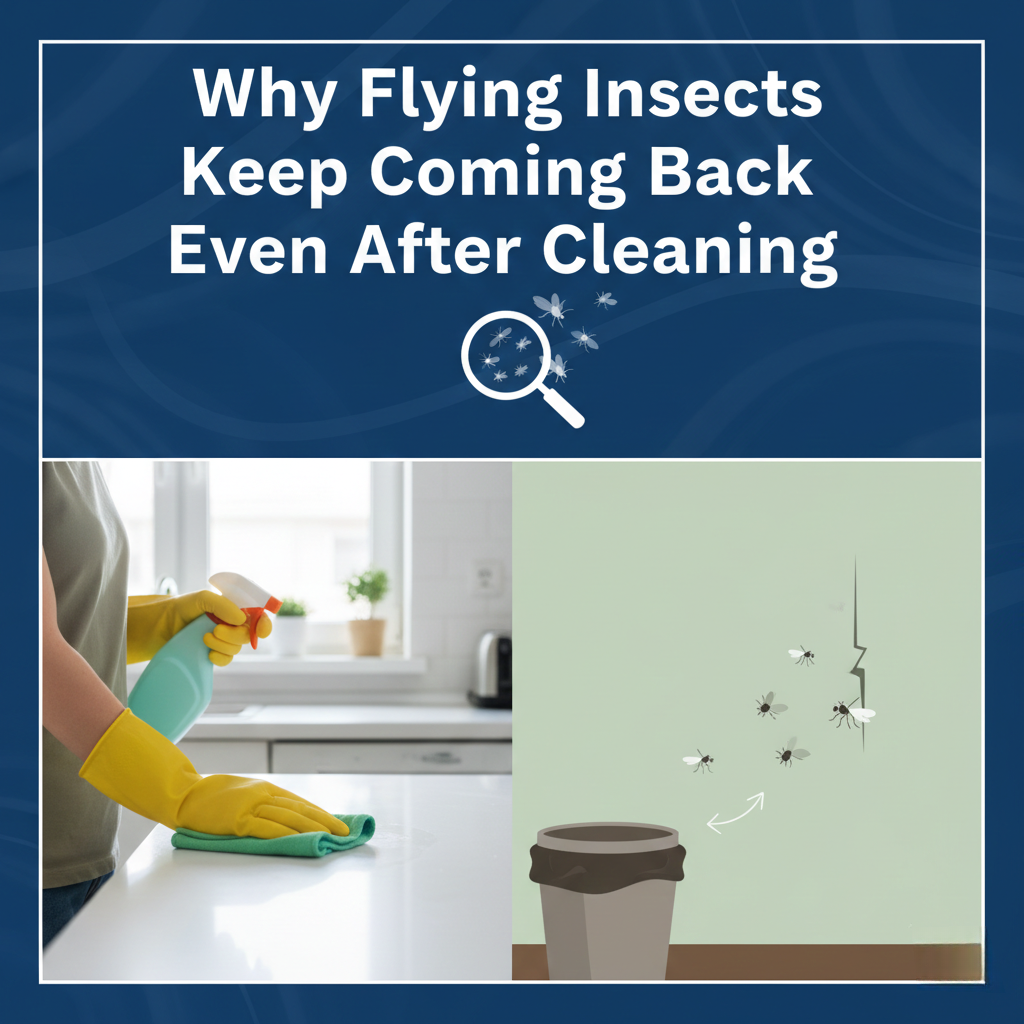
Have you ever noticed that no matter how much you clean your home or yard, flying insects seem to return with a vengeance? You scrub your surfaces, wipe down the windows, and even invest in all sorts of pest control methods, yet those pesky flies, mosquitoes, and gnats keep buzzing around. It’s frustrating, isn’t it? The truth is, these tiny invaders are more resilient than we often give them credit for. In this article, we’ll dive into the reasons flying insects keep coming back, even after you’ve done everything to keep them at bay.
Flying insects are, as the name suggests, insects that possess wings and the ability to fly. They belong to various orders within the insect class, including Diptera (flies), Hymenoptera (bees and wasps), and Lepidoptera (butterflies and moths). Their ability to take to the air gives them a unique advantage in finding food, mating partners, and suitable habitats.
Some of the most common flying insects that invade our spaces include:
Understanding what types of flying insects are invading your space can help tailor your approach to managing them.
Flying insects undergo a life cycle that includes several stages: egg, larva (or caterpillar in the case of moths and butterflies), pupa, and adult. This cycle can vary significantly depending on the species. For example, houseflies can go from egg to adult in just 7 to 10 days under optimal conditions, making them exceptionally quick reproducers.
The rapid reproduction rates of flying insects mean that even if you manage to eliminate some adults, new ones can hatch and emerge shortly after. For instance:
One of the primary reasons flying insects return is the availability of food sources. Leftover food, open garbage cans, and compost piles are like a buffet for flies, bees, and other pests.
Many flying insects are attracted to light. This is why you often see moths fluttering around porch lights. Similarly, warmth can attract insects seeking shelter during cooler months.
Standing water, damp areas, and even overwatered plants can become breeding grounds for mosquitoes. A moist environment creates an ideal habitat for many flying insects, making it crucial to address these areas.
Flying insects have been around for a long time and have evolved various traits that enhance their survival. Their ability to fly allows them to escape predators, find food, and migrate to more favorable conditions.
Many flying insects have developed strategies to withstand harsh conditions, including:
Regularly cleaning surfaces where food is prepared and consumed is crucial. Use disinfectants to kill eggs and larvae that may be present.
Consider using natural deterrents like essential oils (e.g., peppermint, eucalyptus) to repel flying insects. These can be sprayed around entry points and in areas where you notice high insect activity.
While chemical solutions can be effective, it’s essential to use them responsibly. Always follow the manufacturer’s instructions and consider the impact on pets and children.
Even after thorough cleaning, hidden breeding grounds can remain unnoticed. Check areas like:
Certain seasons can trigger an influx of flying insects. Summer and early fall are particularly notorious for mosquitoes and flies, while spring often sees an uptick in moths and other pests. Seasonal changes can affect their breeding patterns and food availability.
While cleaning is a significant step in managing flying insects, it’s important to understand that it’s not a standalone solution. Recognizing what attracts these pests, their reproductive capabilities, and implementing preventative measures can make a substantial difference in keeping them at bay.
In the end, the battle against flying insects is ongoing. With a mix of diligent cleaning, strategic maintenance, and understanding their behavior, you can significantly reduce their presence in your space. So next time you find yourself swatting at a fly or dodging a mosquito, remember—you’re not alone in this struggle, and with the right knowledge and tools, you can reclaim your space!