
For long-term results, combine effective mouse control with exclusion, sanitation, regular inspection, and home maintenance.
August 13, 2026
7 min read time
This information is reviewed by an independent pest control expert.
All external links are non-affiliated and for informational purposes only
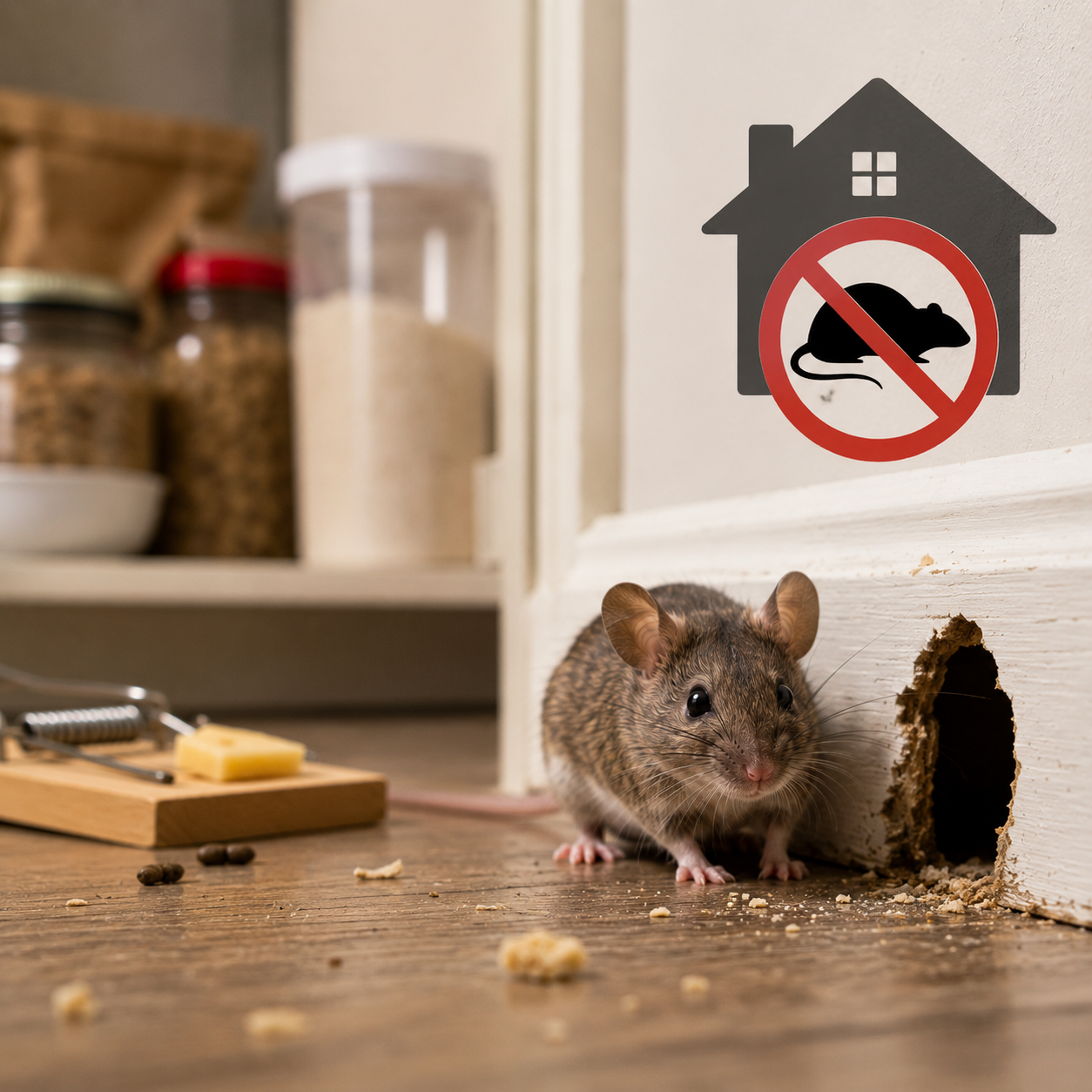
Picture this: after days of setting traps, cleaning the kitchen, and checking every corner of your home, you finally stop seeing mice.
No more scratching sounds at night.
No more droppings behind the cabinets.
No more damaged food packages.
You think the problem is solved.
Then, a few weeks later, you notice another dropping near the pantry.
Soon after, the scratching sounds return.
And you start wondering:
“Why do mice keep coming back?”
Recurring mouse problems are surprisingly common. In many cases, it isn’t because the original control method completely failed. Instead, something around the home continues to provide mice with food, shelter, or a way inside.
In this guide, we’ll explain why mice repeatedly return, what attracts them to your property, and what homeowners can do to break the cycle for long-term rodent control.
Catching a mouse doesn’t necessarily mean you’ve eliminated the mouse problem.
Mice enter homes because indoor environments can provide almost everything they need:
If those conditions remain unchanged, other mice can eventually discover the same property.
This is why long-term mouse control should focus on two separate goals:
Removing existing mice and preventing new mice from entering.
Ignoring either side of the problem can lead to another infestation.
One of the biggest reasons mice return is surprisingly simple:
They can still get inside.
Mice can take advantage of very small gaps around a building.
Common entry points include:
Catching mice indoors without addressing these access points is only a temporary solution.
Another mouse may eventually follow the same route.
Inspect the exterior of your property carefully.
Pay particular attention to areas where different building materials meet and where pipes, wires, or vents enter the structure.
Seal appropriate openings using durable rodent-resistant materials.
Mice don’t need a large amount of food to survive.
Small amounts of accessible food can encourage them to remain inside.
Common food sources include:
A kitchen that appears clean at first glance may still contain enough food to support mouse activity.
Store vulnerable foods in sealed containers and regularly clean:
Don’t forget garages and storage rooms where pet food or bird seed may be stored.
Food isn’t the only reason mice enter houses.
Your home also provides protection.
Mice prefer quiet, dark areas where they can remain hidden.
Common nesting locations include:
Materials such as cardboard, paper, insulation, and fabric can also provide nesting material.
Reduce unnecessary clutter and keep storage areas organized.
Where practical, replace cardboard storage boxes with durable sealed containers.
The fewer hiding places available, the easier it becomes to detect mouse activity early.
Food receives most of the attention, but water can also make your property attractive.
Possible sources include:
Even small moisture sources can contribute to an environment that supports rodents.
Repair leaks and address persistent moisture problems.
Check areas under sinks, around appliances, and inside basements or utility rooms.
This is one of the most common mouse-control mistakes.
You set a trap.
You catch a mouse.
The activity stops.
Problem solved?
Not necessarily.
Traps are designed to address mice that are already present. They do not automatically eliminate:
This explains why homeowners sometimes experience a repeating cycle:
Mice enter → mice are trapped → activity disappears → new mice enter.
Breaking that cycle requires prevention as well as removal.
Sometimes the problem begins outside your house.
Certain outdoor conditions can provide rodents with food and shelter close to the building.
Examples include:
Once mice establish themselves near your home, finding an indoor entry point becomes much easier.
Maintain the area around your house.
Consider:
Creating distance between mouse-friendly environments and your house can reduce the likelihood of indoor activity.
Preventing recurring infestations requires a combination of strategies.
Inspect:
Look for small openings, damage, and signs of rodent activity.
Use appropriate durable materials to close gaps that mice could use.
Pay particular attention to openings around:
Store food securely and clean areas where crumbs accumulate.
Pet food should also be stored properly rather than left accessible overnight.
Keep:
clean and organized.
Continue watching for:
even after activity appears to have stopped.
Early detection can prevent another small problem from becoming a larger infestation.
Strong scents and other repellents may temporarily discourage mice, but they cannot physically prevent entry.
A larger infestation may involve multiple mice and several travel routes.
The first opening you find may not be the only one.
A complete exterior inspection is important.
Garages often provide mice with an easy transition between outdoor and indoor spaces.
A few weeks without sightings doesn’t mean your property can no longer attract rodents.
Prevention should be ongoing.
Some mouse problems can be managed by homeowners.
However, professional assistance may be appropriate when:
A professional inspection may help identify hidden access points and nesting areas that are difficult to locate.
So, why do mice keep coming back?
Usually, it’s because your property continues to offer something they need.
That could be:
Catching mice addresses the immediate problem.
Changing the environment addresses the reason the problem exists.
For long-term results, combine effective mouse control with exclusion, sanitation, regular inspection, and home maintenance.
The goal isn’t simply to catch the mouse that’s inside today.
It’s to make your home much harder for the next mouse to enter tomorrow.